Unlocking the Secrets of Elephant Trunks: A Gateway to Advanced Robotics
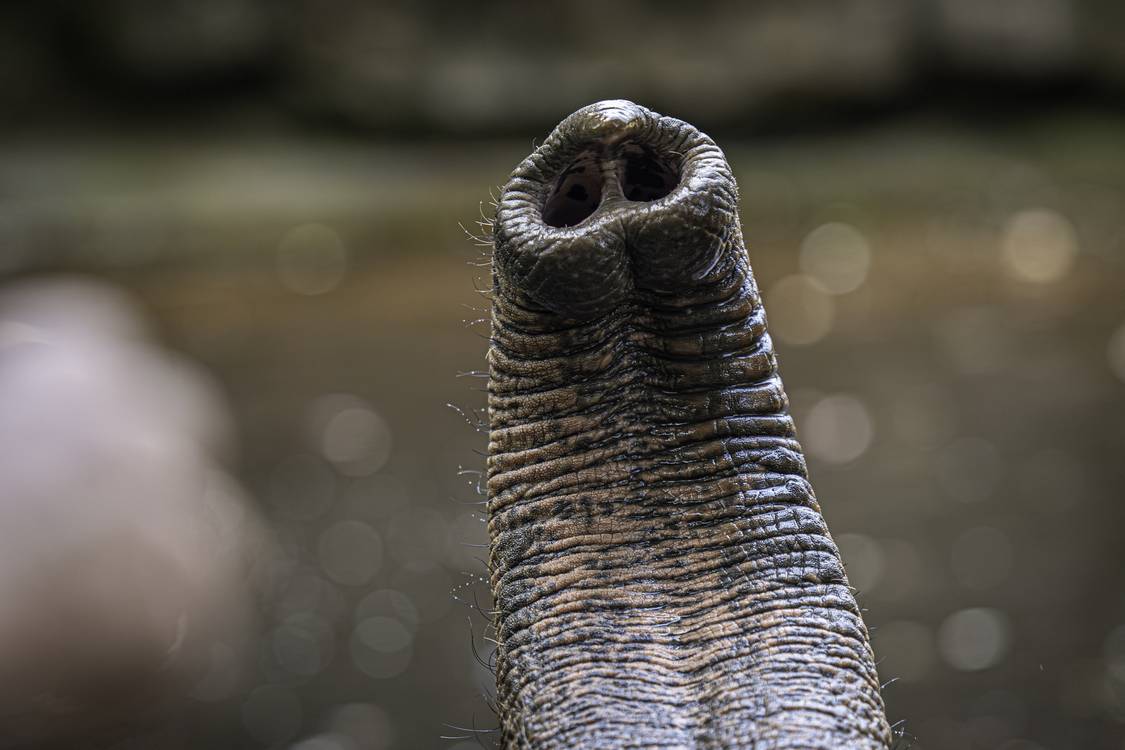
New research has illuminated the remarkable capabilities of elephant trunks, particularly focusing on the unique whiskers that cover them. This study reveals an intriguing stiffness gradient in these whiskers, which allows elephants to possess an “amazing” sense of touch. Scientists believe this discovery could pave the way for innovative robotic technologies inspired by the natural world.
The Marvel of Elephant Whiskers
Covering an elephant's trunk are approximately 1,000 specialized hairs that exhibit unusual properties. These whiskers help elephants detect contact and manipulate objects with exceptional precision, capable of picking up items as tiny as peanuts or as delicate as tortilla chips without damage. The study, led by Dr. Andrew Schulz, highlights how the stiffness gradient—from firm bases to soft tips—enables elephants to gauge their interaction with objects accurately.
Insights into Nature Inspiring Robotics
The fascinating aspect of this research extends beyond biology into the realm of technology. The insights gained from studying these whiskers serve as a blueprint for engineers looking to design advanced sensing technologies. The research team at the Max Planck Institute for Intelligent Systems is exploring how these natural properties can be mimicked in robotic systems, potentially improving how robots navigate their environments.
Applications and Future Prospects
By creating artificial sensors with similar stiffness gradients to those found in elephant whiskers, researchers hope to develop bio-inspired technologies that require less computational power while delivering precise sensory feedback. This remarkable blend of biology and engineering embodies the potential for future innovations aimed at enhancing robotic movement and environmental interaction.
As scientists continue to unveil the complex mechanisms behind the elephant's extraordinary sense of touch, the potential applications in robotics and intelligent systems become increasingly promising. This study not only showcases the wonders of the animal kingdom but also highlights the importance of learning from nature to inform technological advancement.

