Revolutionary Rhino Protection: A New Hope Against Poaching!
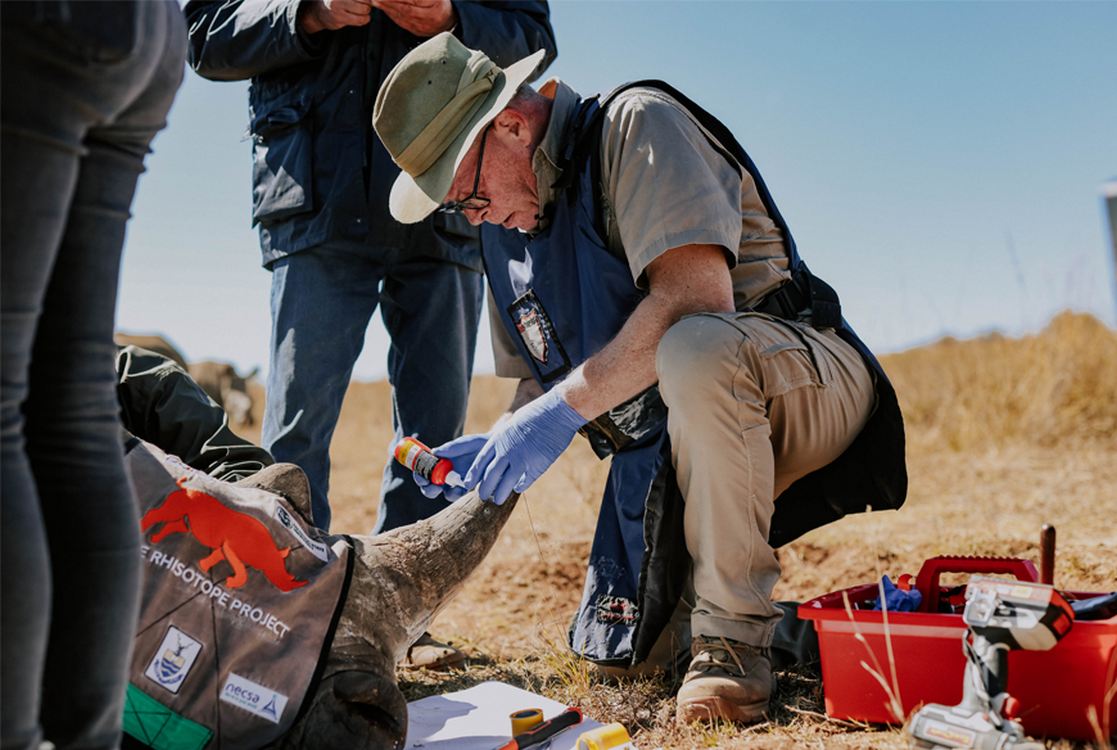
In South Africa, an innovative strategy to combat rampant rhino poaching is being implemented, promising a brighter future for one of Africa’s most beloved and threatened species. Known as the Rhisotope Project, this initiative infuses non-harmful radioactive isotopes into rhino horns, making them virtually impossible to smuggle across international borders.
A Game-Changing Approach
The Rhisotope Project, developed over six years by researchers at the University of Witwatersrand-Johannesburg, aims to leverage existing international security infrastructure designed to detect nuclear threats. The isotopes embedded in the horns leave a detectable residue, ensuring that poachers will face immense challenges should they attempt to traffic these valuable animal parts.
With the ongoing crisis facing rhinos, particularly the white rhino and the critically-endangered black rhino, the project's objective is both ambitious and essential. Jessica Babich, CEO of the Rhisotope Project, summarized its significance: "By deploying this technology at scale, we safeguard not just rhinos but a vital part of our natural heritage."
Scientific Rigor and Safety
Initial field tests have shown promising results. Over a six-month period, rhinos fitted with the radioactive isotopes exhibited no adverse health effects, confirming that the technology is safe for these animals. Professor James Larkin, Chief Scientific Officer of the Rhisotope Project, expressed his confidence in this approach, stating, “We have demonstrated, beyond scientific doubt, that the process is completely safe for the animal.” This success underscores a pivotal moment in conservation efforts, highlighting the potential for innovative science to provide practical solutions.
The Importance of Private Stakeholders
Notably, a significant portion of rhinos in South Africa resides on privately-owned land. Engaging these landowners is critical for the success of the Rhisotope initiative. Babich indicated that collaboration and funding are essential to ensure that as many rhinos as possible can benefit from this groundbreaking technology, allowing them to retain their horns while protecting them from poachers.
A Brighter Future for Rhinos
As illegal poaching continues to threaten rhino populations, the Rhisotope Project offers a glimmer of hope. With the dual benefits of enhancing conservation efforts and potentially reducing costs for private landowners, this approach could prove transformative in the battle against rhino poaching.
The implementation of the Rhisotope technology is not merely a defensive strategy but a proactive measure to ensure that these magnificent creatures remain part of our ecosystems for generations to come. As conservationists worldwide watch with interest, the success of this initiative could pave the way for similar approaches to protect other endangered species facing the dire consequences of illegal wildlife trade.

