Revolutionary Discovery Sheds Light on Titan's Mysterious Origins
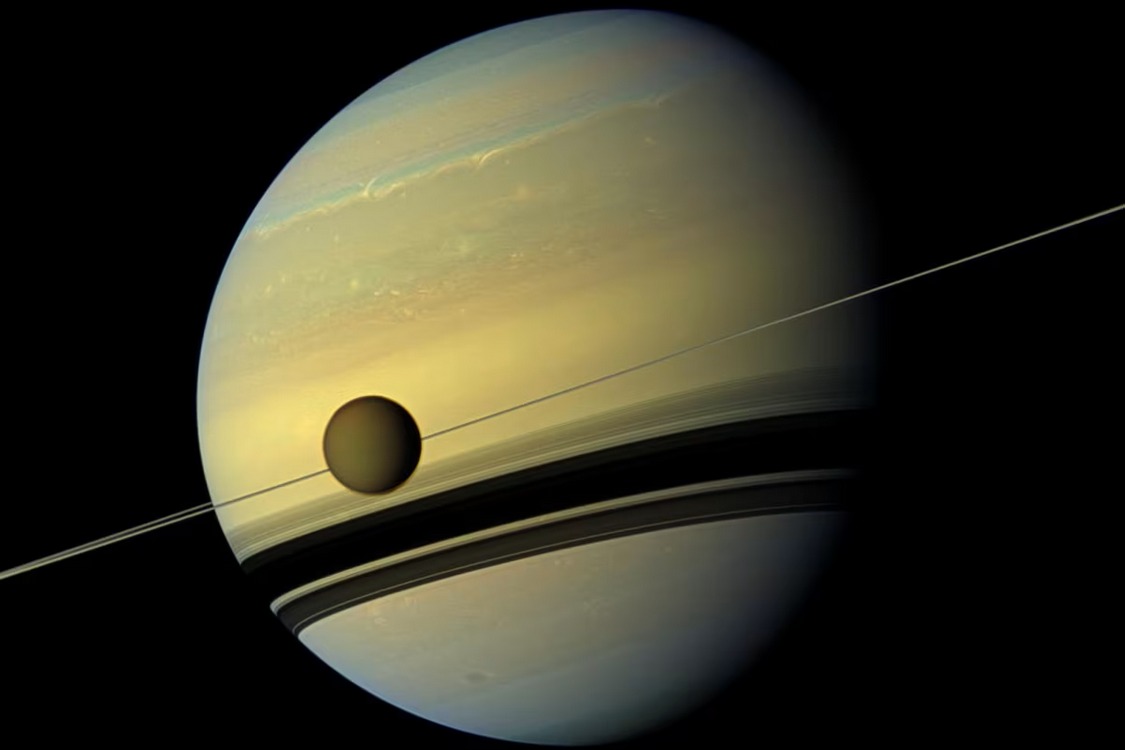
A groundbreaking study has emerged from the depths of space research, proposing a fascinating new theory about Titan, Saturn's largest moon. Despite being larger than Mercury, the origins of Titan have long puzzled scientists. Now, thanks to the innovative research of Matija Ćuk from the SETI Institute, we might be closer to unlocking the secrets behind this cosmic giant.
A Collision that Changed Everything
Ćuk posits that a monumental collision in Saturn's ancient past involving Titan may have catalyzed its impressive size and gravitational influence. By analyzing data collected by NASA's Cassini Probe alongside new research and sophisticated computer simulations, he suggests that Titan's massive structure could stem from an interaction with another moon.
Understanding Saturn's Dynamics
This research does not merely illuminate Titan's formation; it also provides insights into Saturn's unique wobble and tilt, as well as the origins of its famous rings. Ćuk's theory suggests that the collision of an extra moon—potentially the precursor to Hyperion—could have instigated a cascade of events leading to the creation of Saturn's rings within a time span of a mere 100 million years.
Advancements in Space Research
The findings underscore the leaps being made in planetary science, particularly with the advent of advanced observational tools like the James Webb Space Telescope. As our understanding of the universe expands, so too does our recognition of the complexities that govern planetary relationships. Ćuk’s conclusions offer a refined perspective on how the interplay of celestial bodies can shape their environments.
A Shift in Research Paradigms
Fellow researchers, including William B. Hubbard from the University of Arizona and Carl Murray from Queen Mary University, endorse Ćuk’s innovative approach, suggesting it surpasses earlier explanations. This endorsement from notable experts highlights the growing consensus around this new perspective on Saturn and Titan, paving the way for further explorations into our solar system's intricacies.
This study not only deepens our knowledge of Titan but also stimulates a broader discourse on the historical dynamics of planetary systems. As research continues, the potential for new discoveries in our cosmic neighborhood remains remarkably bright.

