Discovery of the Himalayan Happy-Face Spider: Nature's Marvel Unveiled
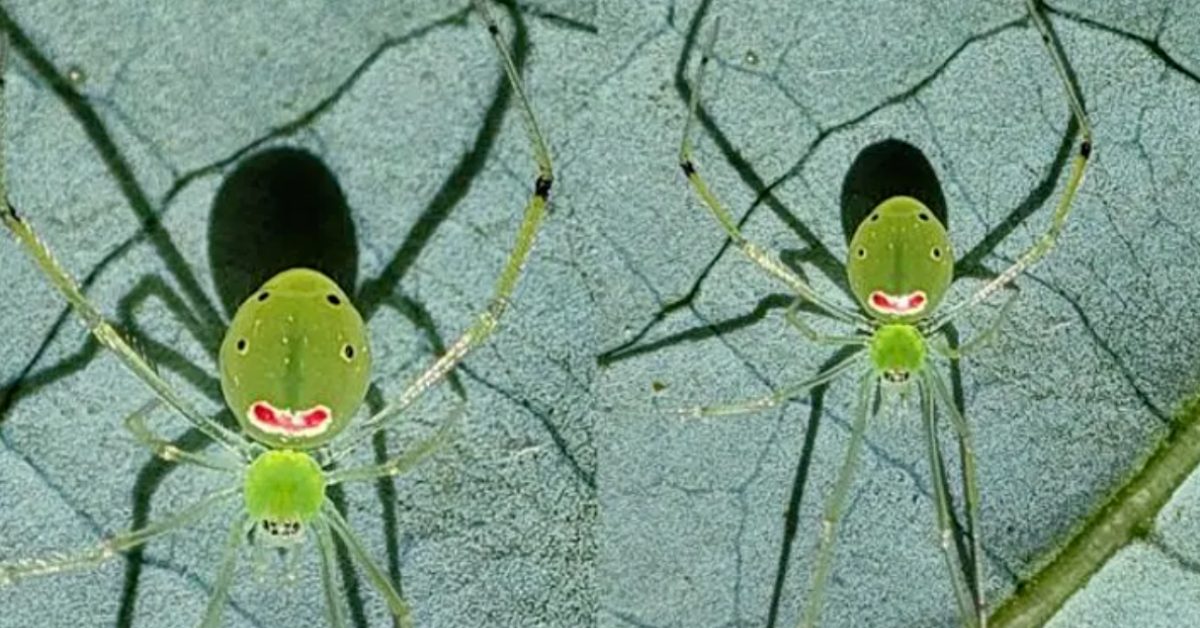
In an intriguing turn of events, two scientists from the Forest Research Institute and the Regional Museum of Natural History have made a remarkable discovery in the mountainous regions of Uttarakhand, India. What began as a survey focused on Himalayan forest ants transformed into the identification of an entirely new species: the Himalayan Happy-Face Spider, known scientifically as Theridion himalayana.
An Accidental Find
The journey to this discovery stemmed from an initial focus on ants. However, Devi Priyadarshini and her collaborator Ashirwad Tripathy found themselves captivated by a striking spider they observed. Priyadarshini recounts, “One fine day, when he shared this image from the underside of a Daphniphyllum leaf, I froze in shock because I had seen the Hawaiian spider during my master's program itself.” This moment marked the beginning of a significant shift in their research trajectory.
A Unique Species
The Himalayan Happy-Face Spider astonished researchers with its vibrant morphology. This newly identified creature showcases an amazing 32 color morphs, featuring cheerful faces in various hues like red, black, and white, mirroring its distant Hawaiian cousin, Theridion grallator. Interestingly, this species evolved its unique characteristics independently in Asia, highlighting the diverse evolutionary pathways that can occur across different environments.
Scientific Mysteries and Future Research
As the researchers conducted their work amidst the lush forests, they were not only met with the discovery of the new spider but also encountered numerous other creatures displaying similar color patterns. Tripathy pointed out that this could hint at either “coevolution or evolutionary adaptations” taking place in the rich ecological tapestry of the Himalayas.
The research has opened up exciting avenues for further study, with future projects aimed at uncovering the genetic basis and ecological drivers behind this remarkable color polymorphism. Priyadarshini expressed her thoughts, stating, “This discovery not only documents a new species but also provides a unique system to explore the evolution and maintenance of colour polymorphism.”
This discovery serves as a testament to nature's complexity and the surprises it continues to unveil. Through their diligent exploration, Priyadarshini and Tripathy have illuminated a section of our biological tapestry that was previously hidden, promising new insights into evolution and the interconnectedness of species.

