Discover the Future of Urban Living: A Green Revolution in City Design
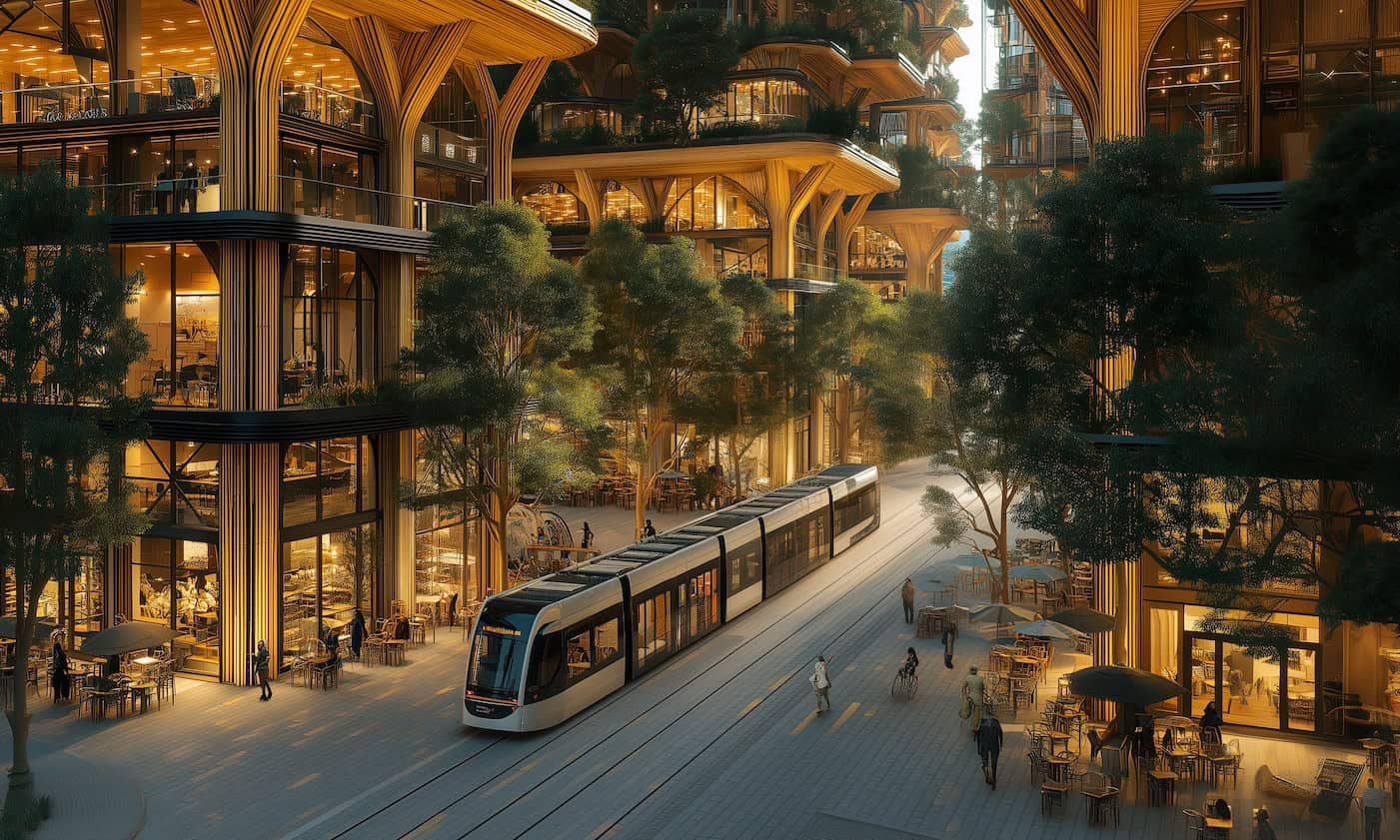
In a bold move towards sustainability and resilience, a visionary urban project named Forest City 1 is set to redefine the metropolitan landscape of the future. Envisioned for a site on the Cambridgeshire-Suffolk border, this groundbreaking initiative aims to create a city where eco-friendliness meets enhanced quality of life, challenging the norms of urban planning.
A New Kind of Urban Landscape
Forest City 1 is not just a dream; it is an innovative concept backed by the non-partisan political movement Looking for Growth and its founders Joe Reeve and Shiv Malik. This city is designed with the environment in mind, featuring wooden towers draped in greenery, streets filled with clean air, and efficient autonomous robovans serving as the new public transport system.
The aim is to develop a thriving community that integrates nature into daily life. With forests occupying over a quarter of its 45,000 acres, the city promises not only to beautify the area but also to enhance biodiversity significantly by replacing monocultural farmland with diverse ecosystems, including plans for one of the largest redwood forests in the world.
Transforming Urban Life
The transition to Forest City 1 comes at a crucial time as urban populations grow, presenting challenges such as affordable housing and sustainable energy consumption. The implementation of a Community Land Trust model ensures that residents can afford to live in their own neighborhoods while maintaining control over community resources.
Moreover, this forward-thinking city design champions security through advanced energy systems. Each building will generate its own energy and recycle water, minimizing reliance on external systems and ensuring that residents enjoy a higher quality of life without ecological compromise.
Global Inspiration: Paris and Beyond
Forest City 1 is part of a larger trend in urban evolution. Cities around the globe, like Paris, are reclaiming urban spaces to prioritize people over automobiles. With over 300 'school streets' pedestrianized, families can now enjoy cleaner air and safer routes for their children. This initiative has spurred similar projects in cities such as Vienna, Stockholm, and London, demonstrating a pronounced shift towards healthy and sustainable urban living.
A Vision That Could Transform the Future
The construction of Forest City 1 signals a hopeful advance in urban development that aligns with the pressing need for climate resilience and improved living conditions. As this project garners more interest from investors and governments, it represents an emerging model for cities worldwide, where nature, technology, and community blend harmoniously.
As urban planners and communities respond to the pressures of climate change and urbanization, the potential for such visionary projects signifies a step toward a sustainable urban paradigm that prioritizes both ecological integrity and human well-being. The future city is not a distant fantasy; it is already under construction, paving the way for a more livable and sustainable world.

