A Historic Walk for Peace Captivates the Nation
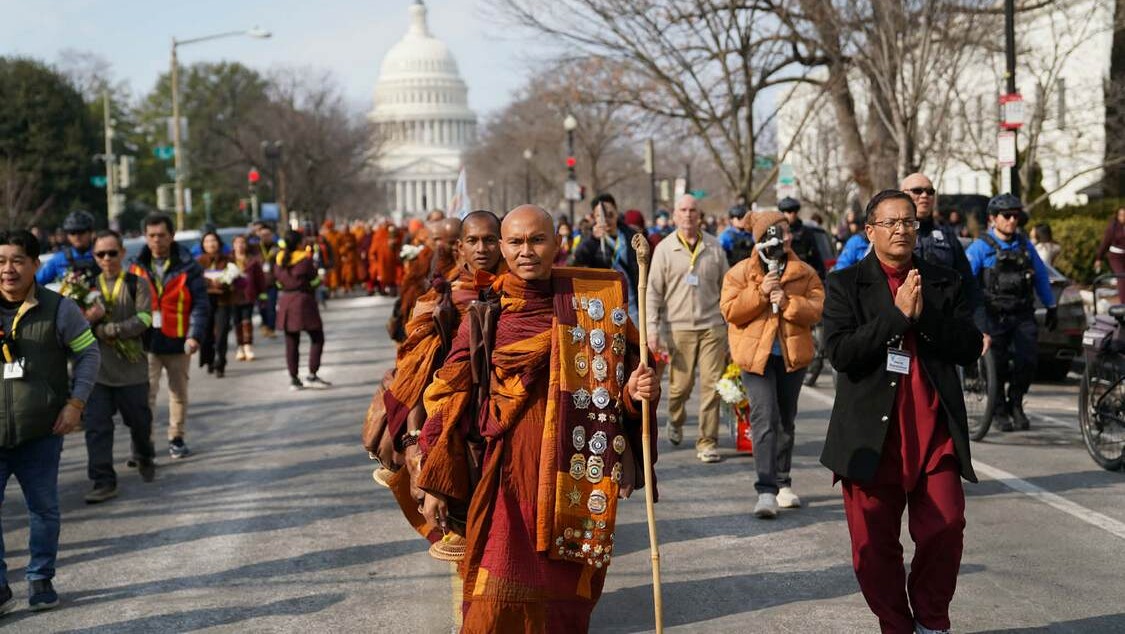
In a remarkable display of spirituality and unity, a group of 19 Buddhist monks recently embarked on an unprecedented journey, walking 2,300 miles from Texas to the National Cathedral in Washington, D.C. Their mission? To promote peace and mindfulness in a time when these values are desperately needed across the globe.
A Tradition of Peace
Venerable Bhikkhu Pannakara, the leader of the monks, expressed the profound significance of the moment, stating, “This is the moment I will remember for the rest of my life.” This sentiment resonates deeply as the monks, who are part of the Theravada Buddhist tradition, practiced “Vipassana” meditation and shared teachings about breathing and meditation throughout their 15-week journey.
A Silent Impact
The sight of these saffron-robed monks walking barefoot along busy streets attracted considerable attention. Thousands cheered, while others observed a respectful silence, acknowledging the profound message of peace conveyed through their presence. One attendee described the atmosphere at the first public stop at American University's Bender Arena, where 3,500 individuals welcomed the monks in introspective silence.
Uniting Diverse Communities
The journey culminated in an interfaith gathering at the National Cathedral, hosted by Washington Episcopal Bishop Mariann Budde. Here, Ven. Pannakara invited the audience to share in a moment of silent reflection, encouraging all to recite the mantra: “Today will be my peaceful day.” This moment of collective introspection acted as a bridge, drawing people from various faiths and backgrounds together, united in a shared pursuit of peace.
A Resonating Message
The public response to this event has been overwhelmingly positive. Resident Nicole Krakora remarked on social media that the series of events were “respectful and loving,” and likened the atmosphere at the Lincoln Memorial to that of Martin Luther King Jr.'s iconic speech, reinforcing the idea that peaceful coexistence and understanding transcend time and ideology.
As the monks concluded their journey, they delivered a timeless message: that in the midst of turmoil and division, the power of peace, silence, and unity can transform communities and inspire individuals in their daily lives. The Walk for Peace serves as a reminder that despite the chaos, moments of collective reflection can ignite a broader call for harmony.

