
Your Eyes and Mouse Movements: The Secret to Better AI Personalization Unleashed!
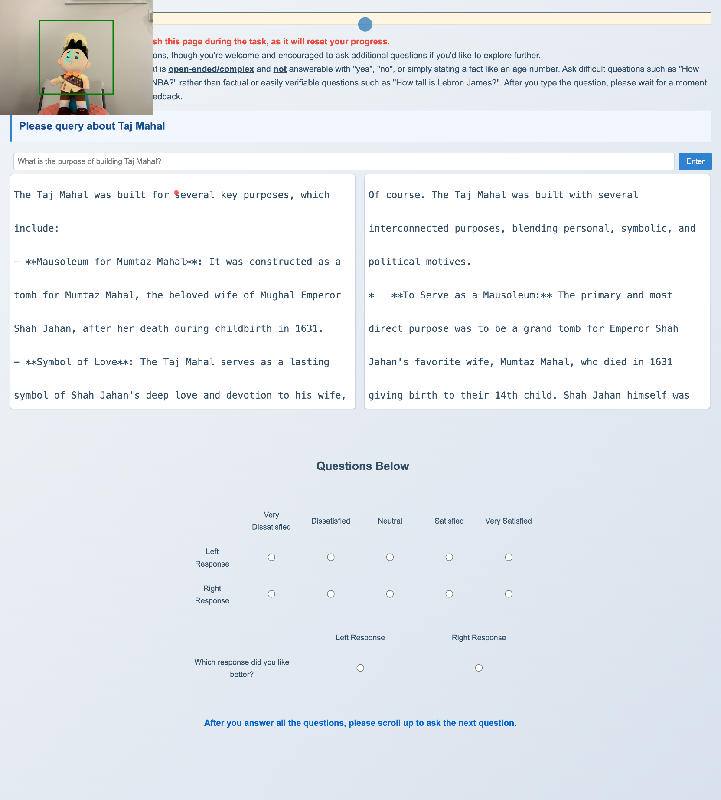
In a groundbreaking study conducted by researchers from the University of Massachusetts Amherst and York University, the untapped potential of implicit user feedback has been explored to refine the training of Large Language Models (LLMs). The paper titled "Your Mouse and Eyes Secretly Leak Your Preference: LLM Alignment using Implicit Feedback from Users" reveals how simple actions like eye movements and mouse trajectories can significantly improve the accuracy of AI responses.
The Power of Implicit Feedback
Traditional methods for aligning LLMs often rely on explicit user feedback, such as thumbs-up or thumbs-down ratings. However, this feedback is rare and difficult to obtain. The research team recognized that implicit feedback—like where users are looking and how they move their mouse while interacting with the AI—could provide a more accurate reflection of user preferences. By capturing mouse paths and gaze points during Q&A sessions, they built a dataset called IFLLM, consisting of over 1336 multi-turn interactions.
The IFLLM Dataset: A Game Changer
The IFLLM dataset not only includes the actual text of the user queries and the LLM responses but also tracks users' eye gaze and mouse movements using standard webcams. This innovative approach allows for a nuanced understanding of how users engage with content. The researchers found that users tend to direct their attention to different parts of the responses depending on the length and complexity of the answers, highlighting the diversity of their engagement behaviors.
Boosting AI Performance: A Quantifiable Impact
By leveraging this implicit feedback, the team developed a new reward model that substantially improved the performance of LLMs. The model's accuracy in predicting user preferences jumped from 55% to 64% by incorporating eye gaze and mouse trajectory data. This not only enhances AI alignment but also encourages a positive feedback loop, leading to better user experiences and satisfaction.
A Future Driven by Human-Centric AI
As AI systems increasingly become part of our daily lives, understanding and integrating user preferences is paramount. The implications of this research are profound. With the integration of implicit feedback mechanisms, future AI assistants could better adapt to individual user needs, providing tailored responses that align closely with personal preferences. This means that instead of relying solely on explicit feedback—which is often sparse and biased—AI can learn robust patterns of user behavior through natural interactions.
Ultimately, this research paves the way toward building more intuitive, responsive, and user-oriented AI systems that evolve alongside their users, ensuring a more personalized experience and a leap forward in AI alignment.
Authors: Haw-Shiuan Chang, Jeffrey Gomez, Mehul Patwari, Aryan Sajith, Hamed Zamani




