
Unveiling the Intricacies of Learning: A Unified Approach to Control, Inference, and Thermodynamics
Recent research has illuminated previously uncharted territories at the intersection of control theory, statistical inference, transport, thermodynamics, and machine learning. The paper titled "Bridging Control, Inference, Transport, and Thermodynamics: From Theory to Applications in Learning" by Emmy Blumenthal et al. seeks to unify these disparate fields by exposing the fundamental connections and unveiling a conceptual framework that facilitates the development of robust learning algorithms.
A Conceptual Framework Integrating Diverse Fields
The authors emphasize a common theme throughout these fields: optimizing free-energy-like functions subject to dynamical or statistical constraints. This connection becomes evident when examining fundamental principles that govern systems ranging from simple mechanics to complex machine learning models.
The review consists of a detailed exploration of the variational structure that defines mechanics, control, and inference, illustrating how optimal control strategies can be derived from a single variational language. Techniques such as Lagrange multipliers and Hamiltonian dynamics have been pivotal in aligning these concepts, enabling a smoother transition between theoretical frameworks and practical applications.
Control, Transport, and Thermodynamics: A Unified Perspective
The study progresses to illustrate how control and transport can be utilized to understand probability densities and optimize inference processes. By exploring the Schrödinger bridge problem, the authors demonstrate that controlling the evolution of probability distributions can be framed as a problem of minimizing the Kullback-Leibler divergence, ultimately leading to more efficient learning methods.
Furthermore, the paper draws intriguing connections between thermodynamics and information theory, showing that maximum-entropy inference principles can be directly related to systems at equilibrium. In doing so, they redefine the scope of traditional thermodynamic principles through the lens of modern statistical mechanics, offering fresh insights into both equilibrium and nonequilibrium systems.
Sampling and Control: Bridging the Gap
In the realm of machine learning, effective sampling from high-dimensional distributions remains a pressing challenge. The authors propose that leveraging concepts from control theory can facilitate the improvement of sampling strategies in complex settings, such as in Bayesian inference or probabilistic graphical models.
Particularly noteworthy is the introduction of Annealed Importance Sampling (AIS) — a method that enables efficient sample generation from difficult target distributions by connecting the base and target distributions through controlled dynamic processes. This technique not only improves accuracy but can also alleviate the burden of traditional importance sampling methods prone to high variance and inefficiency.
Applications in Reinforcement Learning and Generative Modeling
The research culminates in applications of this unified framework to contemporary problems in reinforcement learning and generative modeling. By incorporating a maximum-entropy approach, the authors illustrate how learning algorithms can effectively balance exploration and exploitation, leading to more robust and efficient decision-making processes.
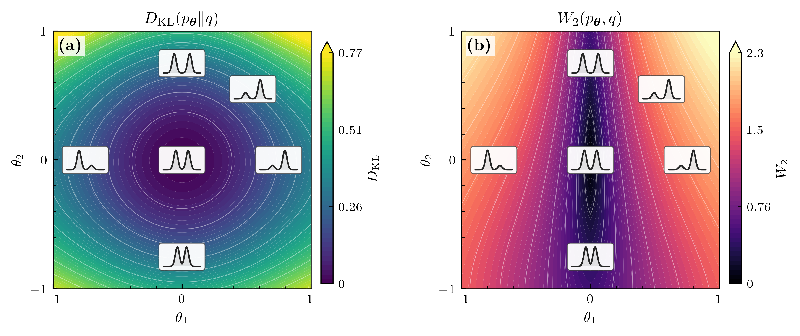
In generative models, concepts from Wasserstein geometry are employed to yield new insights into the training dynamics of large models. The interplay between optimal transport and generative modeling not only enhances sampling efficiency but also tackles the challenges posed by multi-modal distributions in high-dimensional spaces.
In summary, this review highlights the significant conceptual advancements achieved by integrating control theory, inference, transport, thermodynamics, and machine learning into a cohesive framework. This synthesis not only bears implications for the development of advanced algorithms but also inspires fresh perspectives across academic and practical domains.
Authors: Emmy Blumenthal, Nikolas Claussen, Benjamin Eysenbach, Catherine Ji, Gautam Reddy, Colin Scheibner, Benjamin Sorkin




