
Unveiling the Impact of Age and Digital Literacy on Performance in Virtual Reality: The Insights from a Comprehensive Study
A groundbreaking new study has emerged from a collaboration between multiple institutions, shedding light on how age, digital literacy, and interaction techniques influence performance in immersive virtual reality (VR). This research is particularly vital as VR technology becomes increasingly integrated into training and cognitive assessment methodologies.
The Importance of Interaction Modality
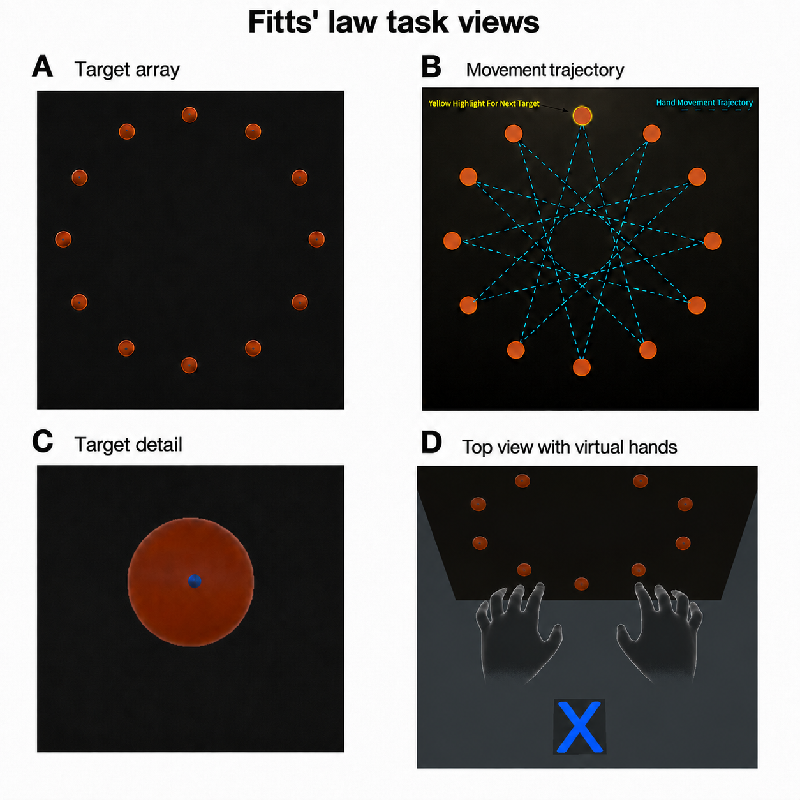
The study examined various modes of interaction within a VR environment using a five-mode Fitts' law task, which included techniques like eye-gaze, head-gaze, controller ray-casting, and direct touch using virtual hands. The results revealed that different modes of interaction significantly affect user performance, with the controller direct touch technique demonstrating the highest absolute efficiency while showing the steeper age-related performance decline when compared to other methods.
Age-Related Findings
One of the primary findings was that older adults (aged 60 and above) consistently demonstrated slower task completion times across all modes of interaction, underscoring the necessity of considering age effects in the design of VR assessments. Interestingly, while the controller direct touch method exhibited the steepest relative age gradient, it remained one of the fastest options available, thereby presenting an avenue for effective VR design that accommodates older users.
The Role of Digital Literacy
The study also examined digital literacy as a factor influencing performance. Higher levels of digital literacy were associated with faster completion times in cognitive tasks within VR but did not significantly correlate with psychomotor performance in pointing tasks. This finding has important implications, suggesting that while familiarity with technology can enhance cognitive assessments, it may not uniformly benefit all types of VR interactions.
Processing Speed: A Shared Component
Critically, the research supports the idea that processing speed is a common underlying factor connecting psychomotor performance and cognitive flexibility in VR tasks. The study highlighted that a Fitts-derived speed score could predict performance on cognitive tasks, indicating that enhancing psychomotor skills may also uplift cognitive functioning, especially in older adults.
Implications for Future VR Development
Given these findings, researchers advise that VR assessments should standardize interaction modalities and consider the unique needs of older populations. The integration of digital literacy evaluations in VR design is also recommended to ensure equitable assessment across various user demographics.
As VR technology continues to evolve, understanding the nuances of how different factors impact user performance will be essential for creating inclusive and effective virtual environments. This study thus serves as a crucial foundation for future research and practical applications in the realm of immersive digital experiences.
Authors: Panagiotis Kourtesis, Katerina Denaxa, Lydia Asimakopoulou, Petros Roussos, Maria Roussou




