
Unveiling the Hidden Risks of Remote AI: How Network Centralization Affects Security in the Model Context Protocol Ecosystem
As artificial intelligence (AI) systems become more integrated with external resources, understanding the safety and reliability of these connections is more crucial than ever. A groundbreaking study by Muhammad Abdullah Sohail from the University of Calgary sheds light on the Model Context Protocol (MCP)—the framework that enables autonomous agents to interact with external data and functionalities—and its potential vulnerabilities.
The Shift to Remote Architectures
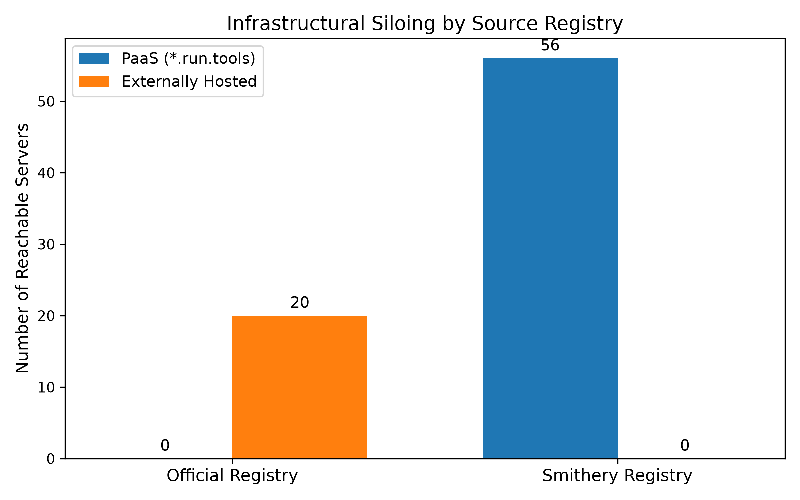
The research identifies a key transition in the MCP ecosystem from local processes to remote deployments over Streamable HTTP. This shift, while enabling greater flexibility and scalability for AI applications, introduces significant security and architectural concerns. The study reveals that many of these remote servers share a high level of centralized network infrastructure, heightening the risk that a single failure could disrupt services across multiple AI tools.
The Three-Tier Observability Framework
To better understand the network’s security posture, the study proposes a three-tier observability framework. The levels are catalog metadata (O0), passive compliance signals (O1), and live vulnerability analysis (O2). This framework allows for a nuanced view of the ecosystem, helping operators make informed decisions about the trustworthiness of remote servers they wish to connect to.
High Centralization: A Double-Edged Sword
In a striking finding, the research calculated a Herfindahl-Hirschman Index (HHI) of 0.736 for the MCP ecosystem, indicating a highly concentrated network environment. This means that a significant portion of infrastructure is operated by only a handful of providers. With 85.5% of reachable servers hosted on a single cloud provider, the risk of systemic failure is evident, as any disruption could have widespread impacts on all dependent AI systems.
The Authentication Dilemma
Another critical observation is the correlation between hosting platforms and server authentication mechanisms. The study revealed that 94.6% of servers hosted on commercial platforms enforce strict authentication protocols, which, while enhancing security, also limits external tools' ability to analyze vulnerabilities. This highlights the dilemma: strong security measures can reduce the visibility needed to ensure safety against potential threats like tool poisoning.
Implications for AI Gateway Operators
The findings underscore the need for AI gateway operators to adopt strategies that account for the current state of the MCP ecosystem. As 82.9% of the reachable infrastructure was opaque to live security analysis, developers are encouraged to require credential provisioning before assessing the safety of external servers. This cautious approach could include maintaining a local trust ledger and ensuring accountability in server configurations.
A Call for Transparency
The paper advocates for mechanisms that could decouple security from observability, such as introducing a Tool Schema Transparency Log. Implementing standardized security metadata fields could enhance transparency and facilitate better pre-screening of servers while preserving the benefits of strict authentication protocols.
With the rapid evolution of AI systems and their infrastructure, this research serves as a wake-up call for both developers and regulators. By acknowledging the risks associated with network centralization in AI and advocating for improved transparency and security measures, we can better prepare for the future of autonomous systems.
Authors: {Muhammad Abdullah Sohail}




