
Unraveling the Power of Social Media Insights: How "Social-HUMINT" is Redefining Risk Assessment
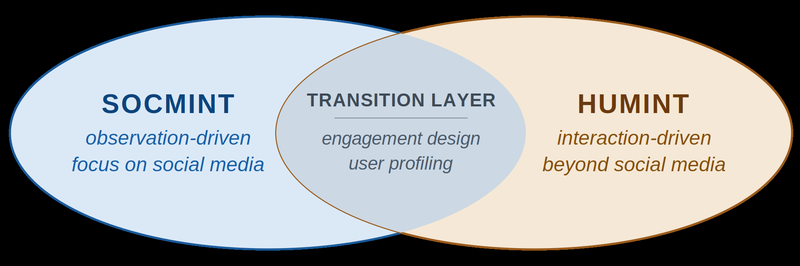
In an era where social media influences virtually every aspect of our lives, the research paper titled Social-HUMINT: An LLM-Augmented Unified Framework for Measuring Social Media Exposure breaks new ground in understanding how social media profiling can pose risks for individuals and organizations alike. Authored by Pellegrino Casoria and Simon Pietro Romano from the University of Naples Federico II, the study explores the dual-use nature of social media information—highlighting how it can be leveraged for both strategic defense and malicious attacks.
The Social Media Landscape Today
With approximately 5.66 billion active social media users worldwide, our digital footprints are larger than ever. The study articulates how people often disclose far more online than they realize, presenting an opportunity for malicious actors to construct detailed profiles from seemingly benign interactions. By using large language models (LLMs), researchers can now infer attributes unsuspected from public posts, shedding light on the hidden vulnerabilities that lurk behind social media activity.
Integrating Two Worlds: SOCMINT and Cyber-HUMINT
The authors propose a unified framework that merges Social Media Intelligence (SOCMINT) and Cyber Human Intelligence (Cyber-HUMINT), creating a comprehensive taxonomy of 38 capabilities aligned with the Cyber Threat Intelligence lifecycle. This merger is crucial as it allows for a cohesive assessment platform that spans passive observation, active engagement, and everything in between. Essentially, it delineates a pathway from simply viewing content to understanding the potential implications of that content, including how it can facilitate social engineering attacks.
Measuring Exposure: More Than Just What You Post
A key innovation put forth in this research is the capability to quantify how exposed individuals and organizations are to social engineering tactics. By employing an LLM-augmented multi-agent system, the authors extract, assess, and validate the susceptibility of users to personalized engagement strategies. This isn't just an academic exercise; real-world applications could help businesses gauge their own vulnerabilities before adversaries do.
Operationalizing the Framework
The research team undertook an empirical study with cybersecurity professionals to evaluate their framework. Remarkably, they achieved a precision rate exceeding 97% in extracting relevant social media data and estimating how well these profiles predict engagement preferences in social engineering attempts. This high level of accuracy provides a dual advantage: While it empowers defenders with insight into their exposure, it also makes it clear just how easy it is for an attacker to exploit available information.
Implications for Future Security Protocols
The growing availability of social media profiling techniques calls for a reassessment of organizational security practices. As these insights translate into actionable intelligence, they not only help identify personal risks but also prompt organizations to adopt more sophisticated countermeasures against increasingly prevalent social engineering threats. The authors emphasize that the same automation tools beneficial for attackers can and should be employed by defenders to continuously evaluate and adapt to new challenges.
The findings in "Social-HUMINT" present a vital step in recognizing the hidden dangers of our digital lives and illustrate the pressing need for a unified approach in combating these threats. As more individuals and organizations embrace social media, understanding and mitigating exposure will be key in navigating this dynamic landscape.
Authors: Pellegrino Casoria, Simon Pietro Romano


