
Unraveling the Mysteries of Supersolids: A Deep Dive into Phase Transitions in Dipolar Quantum Gases
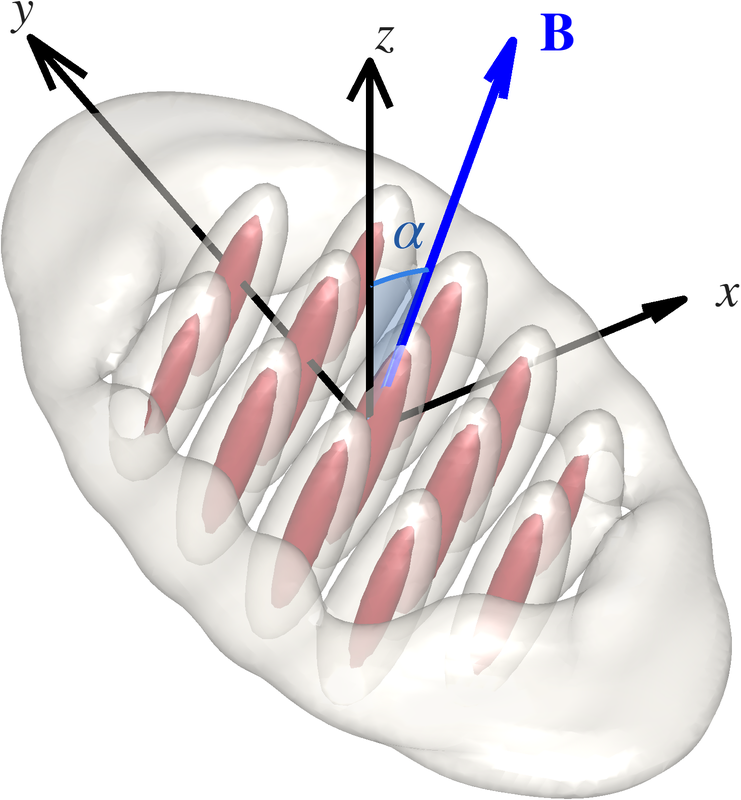
A groundbreaking new study has shed light on the behavior of dipolar quantum gases, particularly focusing on how they transition between different phases. This research, presented by Julian Kusch, Lauriane Chomaz, and Wyatt Kirkby from the Physikalisches Institut at Universität Heidelberg, explores the nature of phase transitions that occur in quantum gases with tilted dipoles at finite temperatures. These findings could have significant implications for understanding complex matter states and improving quantum technology applications.
The Basics of Supersolids and Phase Transitions
Supersolids are fascinating states of matter that combine the properties of both solids and superfluids. They possess crystalline order while simultaneously exhibiting superfluidity, enabling unique behaviors that are not fully understood. The research delves into the phase transitions that these gases undergo by altering conditions such as dipole orientation and particle interactions.
Investigating the Phase Diagram
Using advanced computational simulations based on the extended Gross-Pitaevskii framework, the researchers mapped out a detailed phase diagram of the dipolar gas. This phase diagram illustrates various states, including unmodulated superfluids, triangular droplet arrays, and stripe states. The transitions between these states were identified as either continuous or discontinuous based on the angle of dipole tilt, particle count, and temperature. Remarkably, the study found that the nature of the transition can be tuned by these parameters.
Key Findings: Discontinuous vs. Continuous Transitions
One of the core insights from the research is that the transition from an unmodulated to a modulated state shifts from being discontinuous to continuous as the dipole tilt angle increases. At lower tilts, the transition shows sudden changes, indicating a discontinuous process, whereas at larger angles it evolves smoothly. This observation is crucial as it challenges prior assumptions and suggests that more complex interactions may exist in dipolar gases than previously thought.
Importance of Thermal Fluctuations
The researchers also considered the effect of thermal fluctuations on these transitions. They discovered that temperature plays a significant role in influencing the behavior of phase transitions. Higher temperatures tended to stabilize certain states, pushing the system toward high-density regions, which contributed to the formation of droplets and stripes in the gas. This underlines the critical balance between thermal effects and quantum mechanics in determining the nature of phase transitions.
Implications for Future Research
The findings from this study not only enhance our understanding of quantum gases but also pave the way for future investigations into supersolid phenomena. The researchers emphasize the need for experimental validation of these theoretical insights and suggest exploring different trapping geometries and external conditions to extend these results further.
In summary, the study offers significant advancements in our comprehension of dipolar quantum gases and their phase transitions, setting the stage for new discoveries in condensed matter physics and potential applications in quantum technology.
Authors: Julian Kusch, Lauriane Chomaz, Wyatt Kirkby


