
Unmasking the Shadows: How a New Approach Detects Money Laundering Patterns in Blockchain Transactions
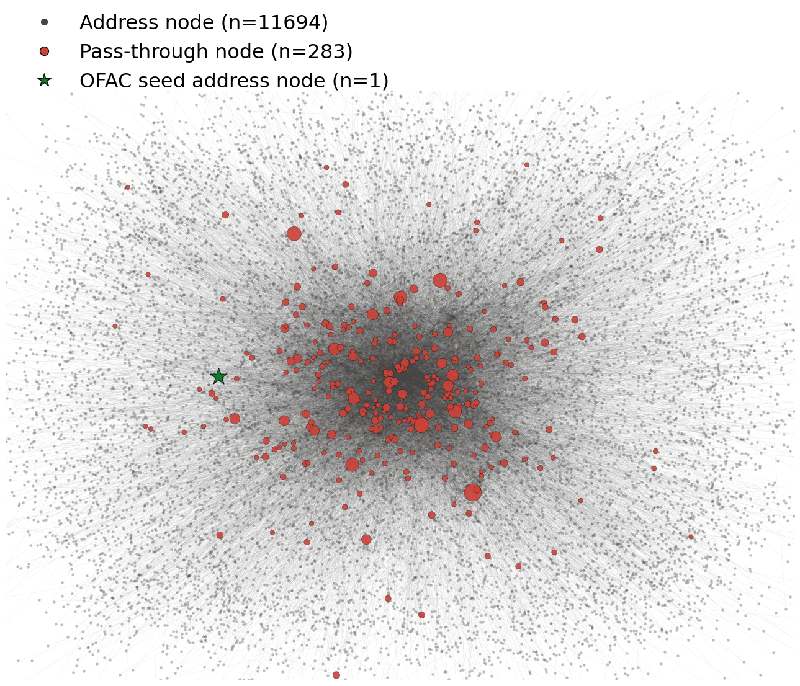
Money laundering has long posed significant challenges for financial institutions and regulators alike, particularly in the digital age where cryptocurrency transactions can obscure the origins of illicit funds. A groundbreaking study by Paolo Climaco from UCLA sheds light on innovative methods to detect money laundering activities, particularly focusing on "layering" patterns within transaction graphs.
Understanding the Layering Process
Layering is a crucial stage in the money laundering process where illicit funds are transferred through a series of transactions to disguise their origins. This research introduces a specific model called transaction graphs, where nodes represent entities (like individuals or organizations) and edges signify the monetary transactions between them. The core innovation of this research lies in identifying a particular pattern of behavior known as pass-through templates, where funds are rapidly received and then forwarded by an entity.
The Innovative Detection Method
Climaco's method formulates the detection of these pass-through templates as an optimization problem, utilizing Edmonds’ blossom algorithm to maximize the number of matched transactions. This approach is efficient and interpretable, enabling regulators to trace back confirmed laundering activities to specific criteria, such as timing and amount of transactions.
Through a detailed analysis of Ethereum blockchain data, the study identified 283 instances of these layering templates, forming a complex network of 1,690 interconnected addresses. Remarkably, six of these addresses were linked to criminal organizations sanctioned by the U.S. Department of the Treasury, underscoring the method's potential in real-world applications.
Insights from Ethereum Transaction Data
The research utilizes publicly available Ethereum transaction data to construct transaction graphs. The findings revealed that over a span of eight months, more than $260 million in stablecoin was moved through these transactions, highlighting the scale and sophistication of the identified laundering network.
Moreover, the identified layering network was noted for its dense interconnectedness, suggesting organized operations rather than isolated incidents of money laundering. The study's methodology offers a pathway for law enforcement and regulatory agencies to enhance their monitoring of suspicious financial activities.
Evolving Anti-Money Laundering Efforts
This research provides a significant contribution to the field of anti-money laundering by introducing a method that doesn’t rely on labeled training data or pre-set topological assumptions, which are common limitations in existing approaches. Instead, it focuses on explicitly defined behaviors, making it a valuable tool in proactive financial oversight.
As cryptocurrencies become increasingly mainstream, the insights derived from Climaco's work will be vital in helping authorities track and manage illicit financial flows within digital currencies, ensuring the integrity of the financial system is upheld.
Through this effective methodology, the study moves us closer to combating the complexities of modern-day money laundering, particularly in crypto environments that demand innovative detection solutions.
For further details, the complete research paper can be reached at the author's email. This pioneering work not only enriches the fields of mathematics and computer science but also serves as a necessary stride towards safer financial ecosystems.




