
Unlocking Token Economies: How DeTEcT Framework is Revolutionizing Economic Event Analysis
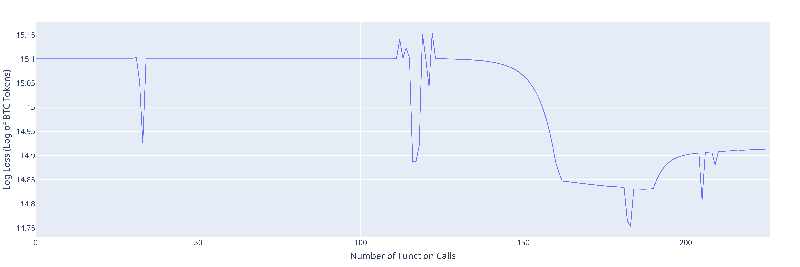
A groundbreaking research paper presented by R. Sadykhov, Dr. G. Goodell, and Prof. P. Treleaven of University College London unveils a sophisticated methodology for modelling token economies using the DeTEcT framework. This innovative approach aims to analyze the impact of specific events on the dynamics of token economies, highlighting its utility through a detailed case study on Bitcoin.
Introduction to Token Economies and Their Challenges
Token economies are unique financial systems that leverage tokens or cryptocurrencies to facilitate transactions. Despite their growing prevalence, these economies face significant challenges, such as regulatory questions and the need for fair conditions to protect consumers and participants. Understanding these complexities is crucial for regulators aiming to ensure stability and transparency.
Introducing the DeTEcT Framework
The DeTEcT framework, an agent-based model, allows for the simulation and analysis of wealth distribution dynamics within token economies. This paper emphasizes how key decisions regarding agent categories and economic interactions shape these models. By establishing a systematic methodology for configuring simulations, the authors provide a repeatable process for analyzing economic policies and their effects on token distribution.
Case Study: Insights from Bitcoin
Using Bitcoin as a primary case study, the researchers demonstrate how to apply the DeTEcT framework. The analysis focuses on Bitcoin's endogenous policies, known as Bitcoin Improvement Proposals (BIPs), which are enacted to modify the economy's operation. The model assesses the wealth distribution across different agent categories before and after these policy changes, allowing for a quantitative measurement of their significance.
Methodology Breakdown
The paper outlines a step-by-step methodology for modeling token economies:
- Agent Category Taxonomy: Defining participants based on their economic roles.
- Wealth Data Partitioning: Segmenting wealth distribution data according to agent categories.
- Boundary Conditions: Establishing conditions for simulations, such as starting and final wealth distributions.
- Interaction and Rotation Topology: Mapping how different agent categories interact within the economy.
- Dynamical System Configuration: Formulating the mathematical representation of wealth flows.
Significance of Findings
The authors provide a robust analysis of how BIPs affect wealth distribution, underlining that significant changes are often felt by mid-tier wealth buckets rather than by the wealthiest or poorest agents. This emphasizes a centralization of wealth within the system, largely driven by interactions with the Control Mechanism, or the Bitcoin protocol itself.
The Future of Token Economic Analysis
As the research highlights, the DeTEcT framework opens up new avenues for exploring economic dynamics within token economies. The authors express a commitment to expand upon their work by testing additional numerical optimization methods and refining the event analysis framework to further assess the impacts of economic policies in various scenarios.
By establishing a clear methodology for modeling and analyzing token economies, this research not only contributes to the academic field but also serves as a valuable resource for regulators, economists, and technologists aiming to navigate the evolving landscape of digital finance.
In summary, through a meticulous approach and rigorous case study, the paper significantly enhances our understanding of how to model and analyze token economies, promising a more stable and insightful economic future.




