
Unlocking the World of Hybrid Digital Twins: A Deep Dive into Mechanical Engineering Innovations
In an era where technology is rapidly transforming industrial processes, the concept of Digital Twins (DTs) is emerging as a revolutionary tool. A new research paper by Mahussi Datongnon and colleagues delves into the intricacies of hybrid digital twins in mechanical engineering, showcasing how integrating physics-based and data-driven models can significantly enhance performance and reliability in industrial applications.
The Backbone of Digital Twins: Understanding the Basics
A Digital Twin, simply put, is a virtual replica of a physical system. This system can reflect changes in real-time and provide operational insights that help in monitoring, simulating, and analyzing. In the realm of mechanical engineering, this technology is gaining traction as it paves the way for accelerated product development and better decision-making. However, as industries embrace these systems, the need for a more structured approach to hybridization—the combination of different modeling techniques—has become evident.
Diving Deep into Hybridization
Hybridization refers to the integration of various modeling paradigms—in this case, both physics-based (deductive) and data-driven (inductive) models—to leverage their unique strengths. The paper highlights an industrial case study involving a fluidic loop digital twin developed at the Centre Technique des Industries Mécaniques (CETIM) in France. Here, the authors illustrate how hybrid models can dramatically improve the accuracy and reliability of digital twins, allowing for more precise predictions and operational efficiency.
Real-world Application: The Fluidic Loop Case Study
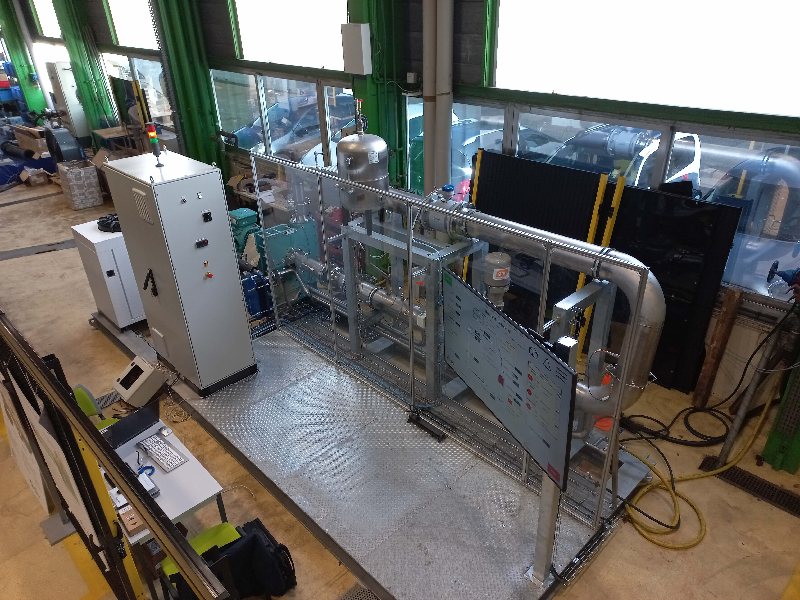
The case study centers on a closed hydraulic loop that serves as a testing ground for the digital twin. This system is equipped with a centrifugal pump and various control mechanisms aimed at managing flow rate, pressure, and temperature. By employing a combination of simulations and real-time data, the digital twin effectively monitors system performance and predicts potential issues before they escalate, thus reducing downtime and operational costs.
Benefits and Future Prospects
One of the most significant advantages of hybrid digital twins is their ability to update and adapt. As physical systems face changes due to wear and tear or varying operational conditions, the digital twin utilizes machine learning techniques to recalibrate itself, ensuring sustained accuracy. This adaptability is crucial in industries where system reliability is non-negotiable.
Looking forward, the research emphasizes the need for standardized methodologies in documenting hybridization processes. By making these decisions transparent and structured, industries can enhance knowledge transfer across projects and improve the reproducibility of hybrid digital twin implementations.
Conclusion: A Step Towards a Smarter Industrial Future
As mechanical engineering increasingly integrates IoT and data analytics, hybrid digital twins stand at the forefront of this transformation. The findings presented in Datongnon’s paper providing a roadmap for industries looking to harness the full potential of hybrid models. By adopting these innovative practices, businesses can expect not only enhanced performance but also a competitive edge in an evolving marketplace.
The journey into the realm of digital twins is just beginning, and understanding the nuances of hybridization may very well be the key to unlocking their full potential.
Authors: {Mahussi Datongnon, Hubert LeJeune, Yoann Jus, Benoit Combemale, Julien Deantoni}




