
Unlocking the Truth: How Network Structures Can Combat Misinformation in the Age of AI
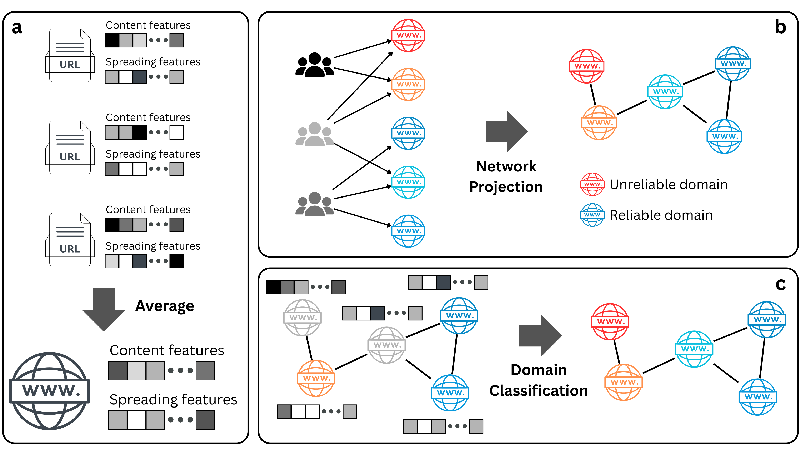
In a world inundated with information, distinguishing between trusted news and unreliable sources has become profoundly challenging. A recent study conducted by researchers from the University of Konstanz and the Max Planck Institute for Dynamics and Self-Organization introduces a groundbreaking approach to enhancing news reliability detection by shifting the focus from individual articles to the structures of information networks.
The Problem of Fake News
With platforms like Telegram facilitating the rampant spread of news, more than a third of global news consumers are now turning to social media as their primary source of information. However, this ease of access has also led to a sharp rise in misinformation, echo chambers, and low-quality content. The complexities of this issue were spotlighted during the COVID-19 pandemic, when rapid dissemination of health-related misinformation presented considerable risks.
The Innovation: Network-Based Assessment
The researchers propose that instead of solely relying on content-based analysis (which has become increasingly difficult due to the sophistication of fake news), a network-based method can yield better results. By examining the patterns of URL sharing in Telegram chats, they constructed a domain co-sharing network.
This network demonstrates a clear trend: low-reliability domains link together, just as reliable ones cluster. Such a finding suggests that users naturally share content from sources of similar reliability, presenting an opportunity to exploit this structure for automated news assessment.
Machine Learning Success: Graph Neural Networks
In their research, the team applied Graph Neural Networks (GNNs), a kind of deep learning model adept at interpreting complex relationships within data. They found that GNNs outperformed traditional machine learning methods—including Multi-Layer Perceptrons—by introducing a new layer of analysis that emphasizes network topology alongside content features.
The standout model, GraphSAGE, achieved an accuracy of 63% in classifying sources based on their reliability, marking a significant improvement over simpler models and even performing effectively without content analysis.
Key Findings: The Power of Structure
One of the pivotal insights from this study is that the structural properties of sharing networks provide valuable signals for judging the credibility of news domains, even when traditional content analysis is infeasible. For instance, the researchers found that GNNs maintained their efficacy in reliably classifying news domains based solely on spreading dynamics and sharing behavior.
Future Implications: A Step Towards Better News Verification
The implications of this research are vast. As misinformation continues to burgeon, leveraging network intelligence could be key in developing more robust frameworks for news verification. This technique opens the door for automated systems to assess information reliability, catering particularly to platforms where large volumes of unverified content circulate.
Moving forward, the researchers aim to refine their approach to enhance performance further, foster cross-platform applications, and embrace more granular analyses of information dissemination dynamics.
As misinformation remains a pressing societal challenge, harnessing the structures of social networks may well be one of the critical tools in our fight for truth.
Authors: Raphaela Keßler, Roman David Ventzke, Viola Priesemann, Giordano De Marzo




