
Unlocking the Secrets of Navigation: How Ehsani and Cheng's Model Sheds Light on Brain Replay Mechanisms
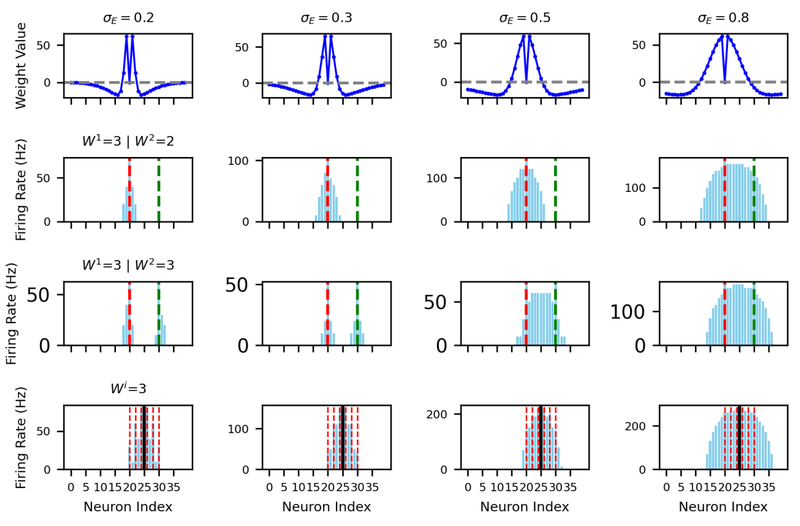
In an innovative study, researchers Masud Ehsani and Sen Cheng from the Institut für Neuroinformatik at Ruhr-Universität Bochum, Germany, have made significant strides in understanding the complex mechanisms of navigation and memory consolidation in the brain. Their research paper "Online Preplay and Offline Replay Optimize Action Selection in a Closed-Loop Navigation Model" delves deep into how hippocampal neurons encode not just current positions, but also potential future states and past locations.
The Role of Hippocampal Neurons
The hippocampus is a vital region of the brain involved in navigation and the formation of memories. Ehsani and Cheng highlight that hippocampal neurons don’t merely work for the present—they actively "replay" experiences post-navigation. This replay occurs during quiet moments, effectively consolidating memories of previously explored routes. They categorize this replay into three distinct types: online forward replay, offline forward replay, and diffusive replay. Each type serves a unique function in enhancing spatial awareness and action planning.
A Novel Model for Action Selection
The researchers propose a closed-loop model composed of place cells and action-selection neurons. This model demonstrates how neuronal sequences generated during both online and offline replay influence action selection. In simple terms, it means that the brain can learn from past movements and prepare for future actions by utilizing a flexible network based on varying synaptic modifications.
In their experiments, Ehsani and Cheng implemented two key navigation tasks. The first, a goal-directed task resembling the Morris watermaze, showed that the model's ability to facilitate shortcut discovery relied heavily on online and offline replays strengthening appropriate action cells at each location. The second task involved random foraging, where diffusive replay mechanisms improved navigation by promoting a more uniform spatial representation and enhancing connectivity within the neural network.
The Mechanism of Replay Modes
What sets this research apart is its focus on a single network architecture that can flexibly generate various replay types, allowing for optimization of navigation behavior. For instance, online forward replay assists in discovering shortcuts toward goals, while offline replay consolidates optimal action sequences for better memory retention. Meanwhile, diffusive replay enhances action generalization, helping the brain to manage a more comprehensive action and state map.
Implications for Future Research
The findings from Ehsani and Cheng provide a solid foundation for further exploration into the intricate mechanics of memory consolidation and navigation. By establishing how these replay mechanisms operate, the study opens new avenues for understanding how the brain manages and utilizes past experiences to inform future actions, a critical aspect of both human and animal behavior.
The implications of this research extend beyond neuroscience, potentially influencing areas such as artificial intelligence and robotics, where mimicking human-like decision-making processes can lead to more efficient navigation algorithms and learning systems.
Conclusion
In conclusion, Ehsani and Cheng's work not only enhances our understanding of how the brain processes spatial information but also highlights the importance of replay mechanisms in refining our navigation capabilities. As we continue to unravel the complexities of the human brain, studies like this will be crucial in paving the way for advancements in multiple fields.
Contact the authors for more information: Masud.Ehsani@ruhr-uni-bochum.de, sen.cheng@ruhr-uni-bochum.de.


