
Unlocking the Secrets of Chiral Dynamics: How Active Particles Are Redefining Vesicle Motion
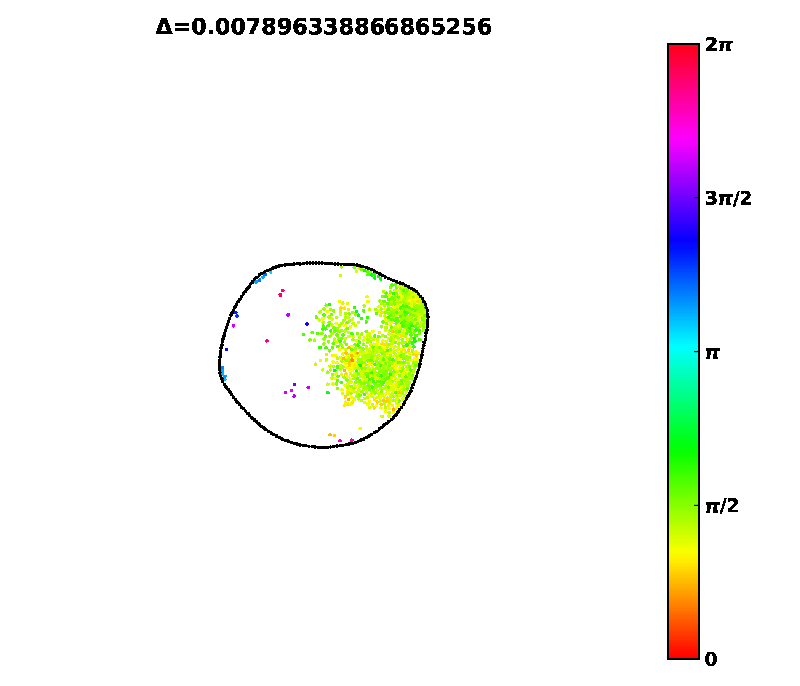
Recent research by Dipak Patra and Anil Kumar Dasanna from the Indian Institute of Science Education and Research Mohali has unveiled intriguing insights into the behavior of deformable vesicles filled with chiral active Brownian particles (CABPs). Through a series of complex numerical simulations, the researchers explored how chirality—a property of asymmetrical objects—affects the motion and shape of these vesicles, which are fundamental to understanding various biological and synthetic systems.
What Are Chiral Active Brownian Particles?
Chiral active Brownian particles are those that move in a directed manner while exhibiting a tendency to rotate. This rotational motion is vital in many biological processes, such as how bacteria swim or how cells migrate. By embedding these particles within a vesicle, scientists can study how stress and forces generated by the active particles interact with the boundaries of the vesicle, affecting its shape and movement.
Distinct Migration Modes Revealed
The researchers identified several distinct modes of movement for the vesicles, including:
- Run-and-tumble: Characterized by intermittent pauses and directional changes, similar to how certain bacteria navigate their environment.
- Rotor-like dynamics: Where the vesicle exhibits circular motion due to the coordinated rotation of active particle clusters.
- Spinner states: In this mode, vesicles display persistent rotation with minimal translational movement, resembling how spinning tops behave.
This spectrum of behaviors is controlled primarily by two parameters: the strength of chirality and the activity level of the particles. Interestingly, the study found that an optimal chirality exists that maximizes the rotational speed of the vesicle, emphasizing the complex interplay between particle dynamics and shape.
The Role of Chirality in Vesicle Dynamics
One key finding of the research is that the angular velocity of the vesicle is not a straightforward relationship with chirality. Initially, increasing chirality enhances the vesicle's rotation, but at a certain point, this effect diminishes. The reason lies in how active particles interact with the vesicle's boundary; higher chirality leads to erratic motions that diminish effective force transmission, ultimately slowing down rotational speed. This non-monotonic relationship presents fascinating implications for applications in soft robotics and synthetic active systems.
Why It Matters
This research offers a framework to better understand the transport dynamics of vesicles—a movement crucial in various biological contexts, from cellular motility to the behavior of synthetic microbots. The insights gained could influence future designs of smart materials and active systems capable of navigating complex environments, improving tasks like load transport or autonomous cleaning.
Conclusion
Patra and Dasanna’s study illuminates how chirality and collective motion of active particles can significantly affect the dynamics of vesicles, with potential applications that extend far beyond basic science. The findings pave the way for further investigations into mixed-chirality scenarios and the interaction of active matter with structured environments, echoing the intricate strategies employed by microorganisms in their natural habitats.
As we step into an era of advanced synthetic systems mimicking biological processes, understanding these mechanisms will be essential for leveraging their capabilities effectively.
Authors: Dipak Patra, Anil Kumar Dasanna




