
Unlocking the Quantum Dance: Smooth Control of Dipolar Bose-Einstein Condensates Revealed
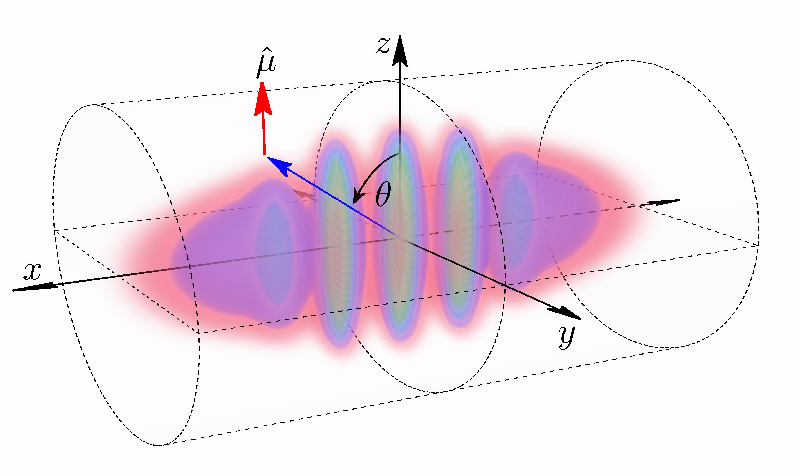
Recent research delves into the intricate world of dipolar Bose-Einstein condensates (BECs), unveiling innovative techniques for smooth and precise manipulation of these quantum states. The study, titled "Smooth time-dependent control of dipolar Bose-Einstein condensates," authored by C. Whitty et al., explores how long-range magnetic interactions can be harnessed to achieve controlled transitions between superfluid and supersolid phases, a topic that could provide insights into future quantum technologies.
What Are Dipolar Bose-Einstein Condensates?
Dipolar BECs are a unique state of matter formed when atoms are cooled to near absolute zero, causing them to occupy the same quantum state. This state exhibits fascinating properties due to the long-range and anisotropic interactions between dipolar atoms, such as those found in certain rare-earth elements. These interactions can lead to the emergence of novel phases of matter, including superfluid and supersolid phases—states that exhibit both frictionless flow and crystal-like structures.
Smoothing the Control Process
A significant challenge in manipulating these condensates lies in achieving smooth transitions without inducing unwanted excitations. Conventionally, achieving such control involved complex quasistatic procedures, which may not be practical for experimental setups. To tackle this, Whitty and colleagues employed a method known as shortcuts to adiabaticity (STA), which allows for rapid and efficient transitions between states without disturbing the system.
The Research Highlights
The study puts forward a systematic approach to determine time-dependent control parameters, specifically focusing on the scattering length, which is a crucial variable in BEC dynamics. By optimizing this parameter over time, the researchers could transition a condensate from a superfluid state to a supersolid state with minimal excitation. This was achieved using a variational approach and direct optimization techniques, which improved the fidelity of the control process—essentially ensuring the desired state is achieved more reliably.
Implications for Quantum Technologies
The methods presented in this research not only enhance the understanding of quantum phase transitions but also pave the way for practical applications in quantum computing and simulation. By refining how we manipulate quantum states, scientists could develop more efficient quantum systems, ultimately leading to advancements in quantum information technology and materials science.
Looking Ahead
As research in this field progresses, there is potential for even more complex control schemes that could gauge multiple parameters at once or apply to different types of quantum gases. The exploration of dynamic traps and loss terms in BEC manipulation may also yield further insights, making the future of quantum research bright and full of possibilities.
Whitty and his team have provided a significant contribution to the ongoing exploration of quantum matter, emphasizing that through meticulous control and understanding, the dance of atoms in a condensate can be orchestrated with precision—a feat that may redefine how we approach quantum systems.
Authors: C. Whitty, A. Alaña, M. Modugno, Xi Chen, Géza Tóth, A. Ruschhaupt, E. Ya. Sherman.




