
Unlocking the Power of Non-Physical Traders: How Speculation Saves Millions in Great Britain's Electricity Market
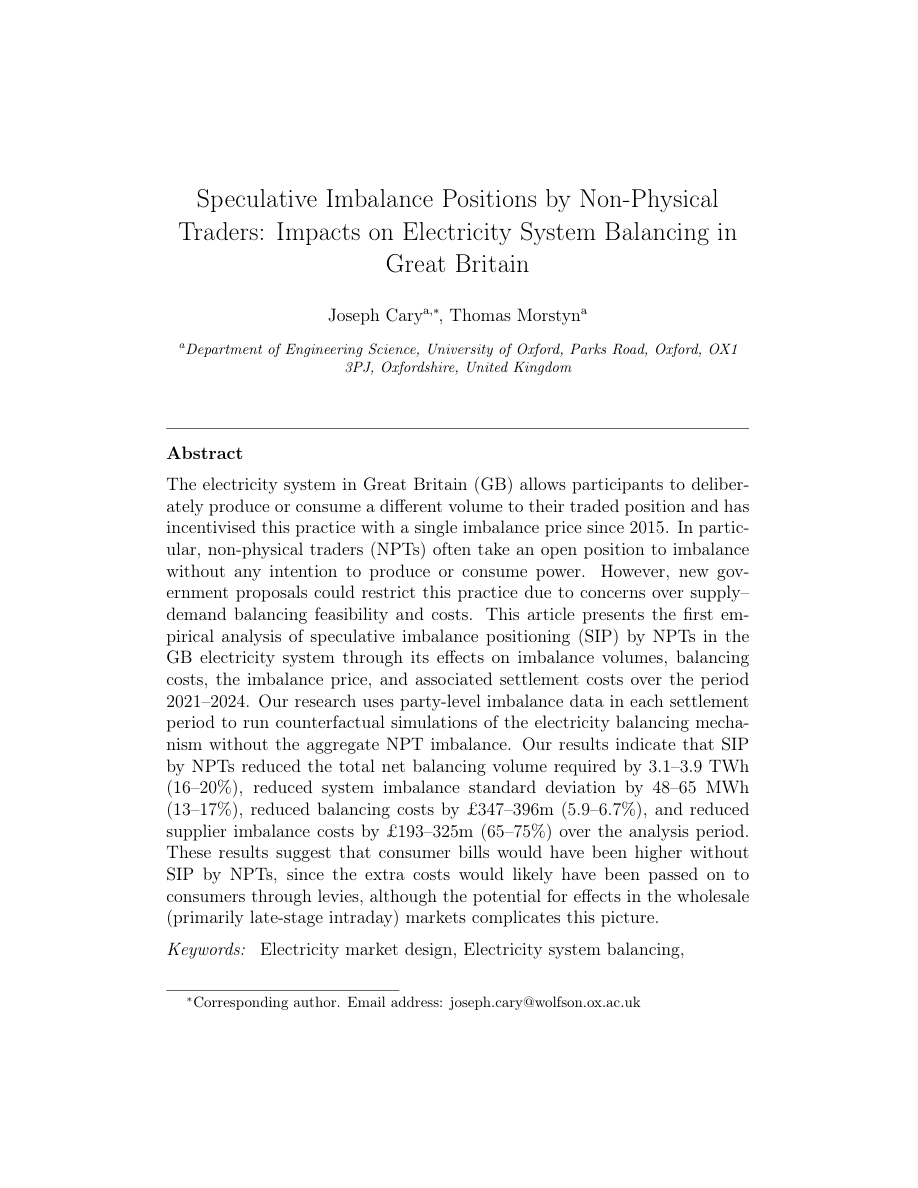
A groundbreaking study by Joseph Cary and Thomas Morstyn from the University of Oxford has shed light on the significant impact of non-physical traders (NPTs) on the electricity system balancing in Great Britain. Contrary to ongoing concerns regarding speculative trading practices, their research reveals that NPTs, by engaging in speculative imbalance positions (SIPs), have successfully reduced system imbalances, ultimately saving the country hundreds of millions of pounds in balancing costs.
The Role of Non-Physical Traders
The electricity market in Great Britain functions on a balancing mechanism allowing participants to adjust their production or consumption levels to match their trading positions. NPTs, who do not physically produce or consume electricity, engage in speculation by taking positions that can influence market dynamics without an intention to deliver energy. This study breaks ground with its first empirical analysis of SIPs and their benefits for the electricity system.
Impact of Speculative Imbalance Positions
The analysis, covering the years 2021 through 2024, found that speculative trading positions taken by NPTs led to a reduction in total net balancing volume required by 3.1–3.9 terawatt-hours (TWh), which translates to a decrease of 16-20%. Furthermore, the costs associated with balancing decreased by £347–396 million, with supplier imbalance charges falling between 65-75%. In essence, NPTs have helped to alleviate the financial burden on consumers by driving down costs associated with energy balancing.
Cost Savings for Consumers
The findings indicate that without the participation of NPTs, consumer electricity bills would likely have been higher due to increased balancing costs being passed on to them. The significant reductions in imbalance costs, particularly for suppliers, demonstrate the important role that NPTs play in maintaining a healthy market environment. As it stands, the research posits that NPTs are effectively creating a buffer against market volatility, benefiting not just traders but the overall public.
Policy Implications and Future Insights
This study arrives at a critical time as the UK government looks into reforming electricity market arrangements that may curtail the practices of NPTs under the guise of ensuring supply-demand balancing. However, this research presents a compelling case for the continued support of speculative trading, urging policymakers to recognize its positive contributions to market liquidity and cost management. As energy markets evolve, understanding the complexities of trader roles will be pivotal in crafting effective regulations aimed at securing a stable and economical electricity system.
The study stands as a clarion call for balancing the need for regulation with an appreciation of the nuanced dynamics introduced by non-physical trading participants. Whether this will turn out to be a turning point for NPTs in Great Britain's electricity market is yet to be seen, but their demonstrated capacity to lower costs could be integral to future policies.
For those invested in the evolution of energy markets, this research marks a crucial foundation for understanding how speculative trading can serve the dual purpose of enhancing market efficiency while safeguarding consumer interests.
Authors: Joseph Cary, Thomas Morstyn


