
Unlocking the Potential of IoT: Antenna Diversity Could Boost Network Reliability by Over 30 dB
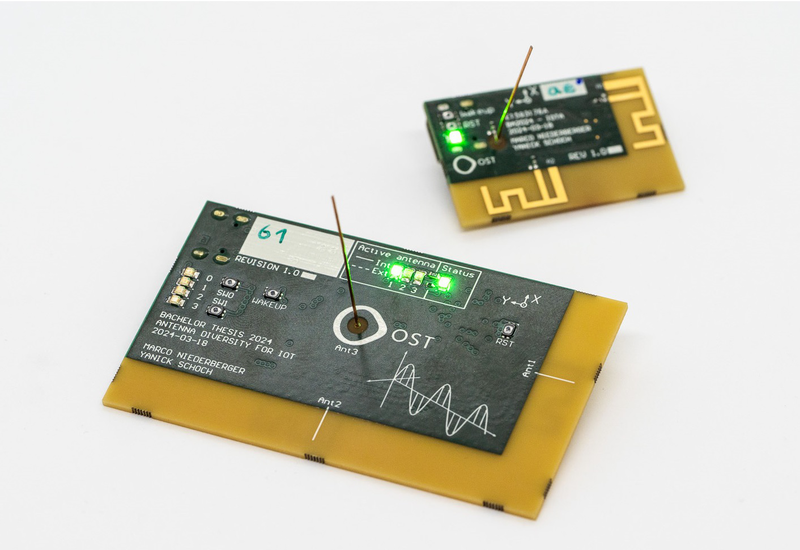
The Internet of Things (IoT) has become an integral part of modern life, revolutionizing industries from healthcare to smart homes. However, ensuring reliable connectivity in this expansive network is a significant challenge. A recent research paper by scholars from the OST Eastern Switzerland University and Steinel Solutions AG sheds light on an innovative solution: antenna diversity. This technique has shown promising results in enhancing the reliability of IoT networks, potentially changing how connected devices communicate.
The Problem with Traditional IoT Connectivity
IoT devices often face limitations in connectivity due to fixed orientations and interference from surrounding metallic structures. When these devices are installed, their location and positioning are usually unchangeable, which can lead to misaligned antennas and degraded signal quality. This can result in poor network performance, particularly in dynamic environments like factories or smart cities where conditions can change rapidly.
What is Antenna Diversity?
Antenna diversity involves using multiple antennas to enhance the connectivity of IoT devices. By integrating antennas with different polarizations, researchers have observed significant improvements in received signal strength. Experiments conducted during this research demonstrated that simply adding a second antenna could boost the signal by 17 dB, while combining multiple antennas resulted in gains exceeding 30 dB in some cases.
Real-World Testing: Results Speak Volumes
This study wasn’t just theoretical; it was conducted in a practical, real-world environment with a six-node network configured in a two-story building. Testing involved measuring the Received Signal Strength Indicator (RSSI) for various antenna configurations. The results were promising: diversity provided significant boosts to signal strength and enabled stability in conditions that would typically hinder performance.
A Key Takeaway: Enhancing Reliability
While some improvements in data throughput were observed, the primary advantage of antenna diversity lies in its ability to enhance network reliability and robustness. With gains ranging from 6 to 34 dB, researchers confirmed that antenna diversity could transform weak or nonexistent connections into stable ones, critical in mission-critical applications like healthcare monitoring and industrial automation.
Justifying the Complexity
Integrating multiple antennas adds complexity to both hardware and software designs. However, the research suggests that the significant improvements in signal quality and network reliability warrant this investment. For IoT applications in complex environments, such as logistics or manufacturing, the benefits outweigh the challenges, ushering in a new era of reliable connectivity.
In conclusion, this groundbreaking research not only highlights the importance of looking beyond traditional solutions but also sets the stage for future developments in IoT technology. As the need for resilient and efficient networks grows, antenna diversity stands out as a game-changing strategy for ensuring seamless connectivity in a connected world.
Authors: Marco Niederberger, Yanick Schoch, Michel A. Nyffenegger, Christian Gwerder, Hans-Dieter Lang


