
Unlocking the Potential of 5G: How RUN-O-RAN Transforms Uplink Localization for Next-Gen Networks
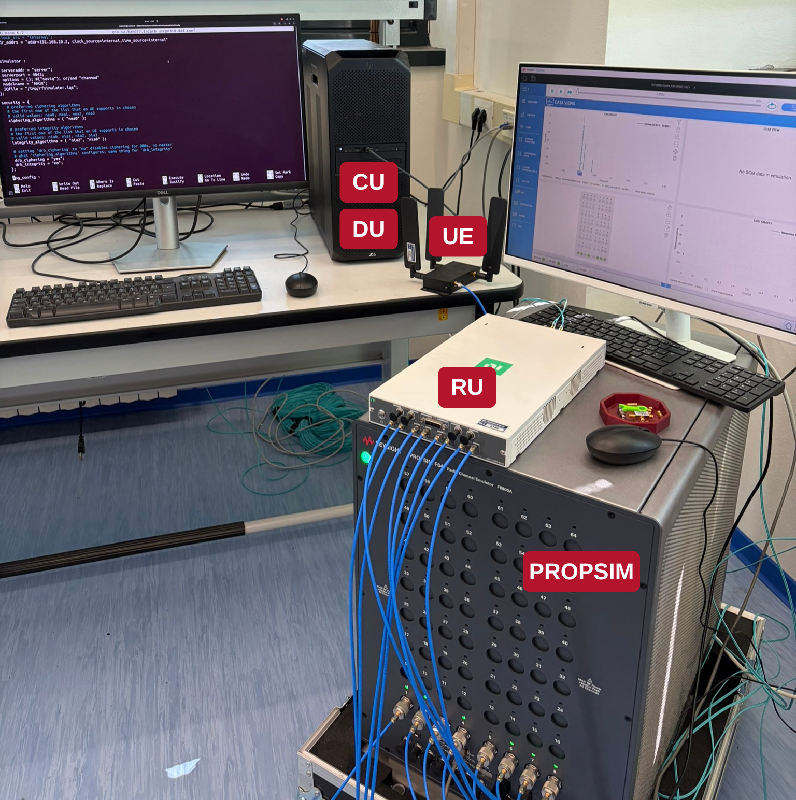
In an era where advanced positioning capabilities are critical for various applications—ranging from emergency services to industrial automation—addressing the limitations of existing localization systems has never been more crucial. A recent research paper introduces RUN-O-RAN, a groundbreaking framework that leverages the O-RAN architecture to enable cooperative uplink localization of commercial 5G devices.
The Need for Accurate Positioning
As satellite-based positioning systems face challenges in congested urban landscapes and indoors, there is an increasing demand for accurate and reliable positioning methods. Although existing 5G technologies offer basic localization capabilities, their practical deployment often depends on the device's hardware capabilities, leaving operators wanting for a more robust and network-centric solution.
What is RUN-O-RAN?
RUN-O-RAN stands for "Radio Unified Network - Open Radio Access Networks," and it aims to address the inherent limitations of traditional RAN architectures. By utilizing standard Sounding Reference Signal (SRS) transmissions, RUN-O-RAN allows the network to estimate the location of user equipment (UE) without requiring additional hardware or modifications to the existing signaling procedures. This approach opens the door for real-time, network-native location services, ultimately transforming how devices are localized in various environments.
How RUN-O-RAN Works
The core of RUN-O-RAN revolves around enabling network operators to utilize SRS transmissions emitted by 5G devices to coordinate positioning measurements across multiple base stations. The framework employs a software-based xApp running in the near-real-time Radio Intelligent Controller to manage and process these signals, establishing a cooperative system that enhances the accuracy of location estimates.
This process involves several key components:
- Cooperative Measurements: Neighboring base stations work together to process SRS signals from a UE, significantly improving multi-anchor positioning.
- Timing-Advance Tracking: The system accurately compensates for timing advances that could skew measurement results.
- Clock Drift Compensation: It addresses discrepancies in synchronization between devices and anchors, ensuring more reliable spatial estimates.
Experimental Validation
To validate the effectiveness of RUN-O-RAN, the researchers conducted experiments involving over 150,000 SRS transmissions in both static and dynamic urban settings. The results demonstrated impressive meter-level localization under varying environmental conditions, showing that the architecture can significantly enhance positioning accuracy without needing sophisticated UE modifications.
The evaluation also highlighted the impact of different factors such as anchor geometry, signal quality, and multipath effects on positioning outcomes, offering valuable insights into potential real-world applications.
Future Implications
As the demand for integrated sensing and communication (ISAC) services continues to rise, frameworks like RUN-O-RAN set the stage for the next generation of network capabilities. By transforming localization into a network-native service, operators can enhance their offerings without burdening end-users with additional responsibilities or requirements. This advancement heralds a future where precise location tracking becomes seamless and ubiquitous.
Overall, the RUN-O-RAN framework not only represents a significant step forward in localization technology but also introduces a paradigm shift in how network services can be developed and deployed in an increasingly interconnected world.
Authors: Viola Bernazzoli, Alberto Ceresoli, Ilario Filippini




