
Unlocking the Future of Urban Life: How Healthy Open-Source Smart City Platforms Drive Innovation
In an era where technology increasingly shapes our cities, the research paper titled “Evaluating the Health of Open-Source Smart City Platforms” sheds light on an essential aspect of urban digital infrastructure. Conducted by researchers Rodrigo Bravo Simões, Fernando Brito e Abreu, and Vasco Amaral, the study evaluates various open-source smart city platforms (SCPs) to highlight their viability and effectiveness for municipalities aiming to harness the power of technological advancements. These platforms act as crucial mediators between Internet of Things (IoT) devices and smart urban services, enhancing efficiency and quality of life for all city dwellers.
Why Open-Source Matters for Smart City Development
The transition to smart cities involves substantial complexities, often requiring a range of technology solutions to manage data and services effectively. The beauty of open-source software (OSS)—often free and customizable—lies in its ability to promote digital sovereignty, allowing municipalities, especially those with limited budgets, to maintain control over their data without falling into vendor lock-in traps. As cities consider options for digital infrastructure, the health of these platforms becomes crucial. The study emphasizes that a robust OSS ecosystem—characterized by active developers, comprehensive documentation, and user support—could be pivotal for a fruitful municipal adoption.
Research Methodology: Health Assessment Metrics
The authors adopted a unique approach to assess the health of various open-source SCPs by focusing on multiple dimensions, including documentation quality, maintainability, security, and community maturity. They analyzed data primarily sourced from repositories on platforms like GitHub and GitLab, utilizing advanced metrics to ensure a thorough evaluation. The incorporation of large language models (LLMs) helped gauge documentation quality, further underscoring the innovative methods the researchers employed to deepen their analysis.
The Findings: Ranking the Open-Source Platforms
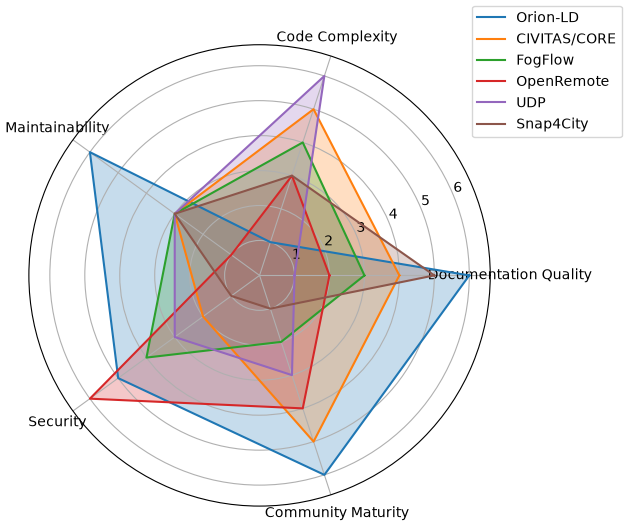
The research evaluates six prominent open-source smart city platforms, including FIWARE and OpenRemote, and ranks them based on their health characteristics. Notably, Orion-LD stood out with an impressive average rank, demonstrating strong documentation quality, maintainability, and community involvement. In contrast, platforms like Snap4City faced discrepancies in community engagement, suggesting that sole reliance on institutional accounts for commits might mask participant numbers and activity levels.
This ranking not only helps municipalities gauge which platforms might serve their needs but also emphasizes the communities around these platforms. A well-supported community implies a more reliable and maintainable software environment, vital for long-term success.
Implications for Future Smart City Initiatives
The insights from this research present both a cautionary tale and a beacon of hope for city planners and local governments. While the obstacles inherent in adopting OSS are significant—especially concerning community support and technical backing—the potential benefits of engaging with these platforms are substantial. As urban centers evolve into smarter entities, understanding and addressing the health of their foundational technologies will be paramount in ensuring successful and sustainable city life in the future.




