
Unlocking the Future of Insurance: How the 2027 Solvency II Reform Transforms Risk Margin Calculations!
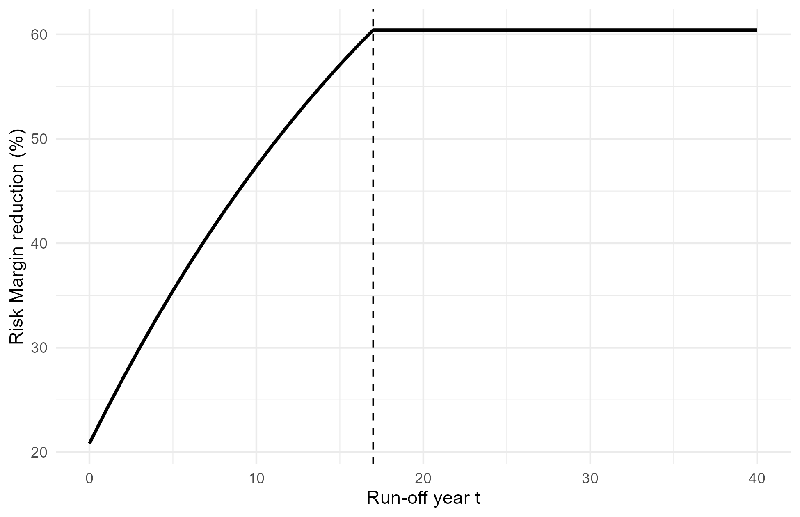
In a significant reform aimed at enhancing the regulatory framework of insurance, the 2027 Solvency II amendments are set to recalibrate the Risk Margin, a crucial aspect in risk assessment for insurers. The changes, primarily focused on modifying the cost-of-capital rate from 6% to 4.75%, along with the introduction of a time-dependent adjustment for capital requirements, promise to reshape the financial landscape of insurance solvency and capital management.
The New Framework and Its Implications
Starting from January 30, 2027, the Risk Margin calculation will not only reflect a straightforward reduction in the cost of capital but will also incorporate how capital requirements evolve over time. This means that capital needed early on will be treated differently compared to capital required later in the run-off period. As a result, insurers could see substantial variations in their Risk Margins based on when the capital is needed.
The new regulation introduces a time-dependent adjustment denoted by a lambda factor, impacting future capital requirements. This adjustment is significant as it directly influences how insurers manage their capital over the long term, potentially leading to a decrease in capital reserves needed for long-duration insurance obligations. According to the research, the expected reduction in Risk Margin based on this recalibration ranges between approximately 20.83% and 60.42%, depending on various factors.
Understanding the Mechanics of Reform
The analytical framework developed in the research paper illustrates how the revised Risk Margin impacts a variety of operational elements within insurance firms. By normalizing projected capital contributions into a distribution across the run-off period, the authors establish a model that effectively measures both temporal effects and stochastic outcomes. This gives actuaries and insurers tools to evaluate and plan for future capital needs under the new regulations.
Key insights from the findings suggest that mean run-off time is not the sole determinant for the effect of the reform. Temporal dispersion, which refers to how capital is spread across time, plays a vital role. The timing of capital contributions can yield different reform effects, highlighting the need for insurance companies to closely analyze their future capital profiles to maximize the advantages of the reform.
Broader Impact on the Insurance Sector
This reform initiative is more than just a regulatory update; it is a step towards aligning insurance practices with contemporary financial market realities. It compels insurers to rethink their strategies for calculating reserves and managing capital, especially concerning the long-term liabilities that often characterize the industry.
As the 2027 amendments are implemented, organizations will need to ensure detailed evaluations of their capital structures and risk strategies. The increased emphasis on timing and dispersion of capital will likely lead to more dynamic and adaptive financial management practices within the insurance domain.
In conclusion, the upcoming changes to the Solvency II Risk Margin framework offer a unique opportunity for insurers to evolve their approaches to capital management. The financial implications of these reforms, coupled with the analytical tools provided by the recent research, will undoubtedly play a crucial role in shaping the future of insurance solvency assessments.
Authors: Khalil Said, Fatima Zahrae Chaayra




