
Unlocking Robotic Potential: How Egocentric Video Transforms Robot Training
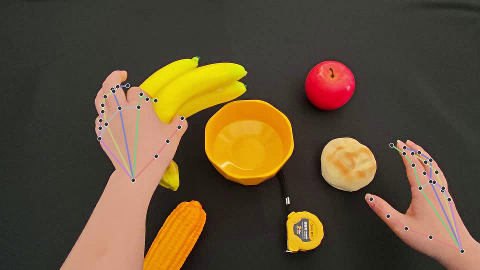
In a groundbreaking study titled "fEgo2Robot: Scalable Robot Data Synthesis from Egocentric Human Data," researchers from AIM3 Lab at Renmin University of China and Alibaba's Qwen Team have pioneered a method to synthesize robot training data from egocentric human manipulation videos. This innovative approach holds the promise of vastly improving robotic capabilities across various tasks, facilitating better generalization in new and diverse environments.
The Challenge of Robot Training Data
Developing efficient and adaptable robot manipulation policies has traditionally relied on extensive and diverse training data. However, collecting such data through direct robot demonstrations is often expensive and labor-intensive, limited by hardware capabilities and the diversity of interactions possible. To address this, researchers are leveraging available egocentric human videos, which capture a wealth of manipulation experiences that would be difficult to obtain through robotic systems alone.
The Ego2Robot Pipeline
The study introduces Ego2Robot, a scalable pipeline for converting egocentric videos into training data suitable for robots. This process involves three key stages: action alignment, visual alignment, and quality curation. It allows for the creation of robust training datasets by synthetically generating over 18,561 hours of manipulation data across 15 different robot morphologies, marking it as the largest ego-to-robot dataset to date.
Evaluating Generalization Across Perturbations
To analyze how well these synthetic datasets improve robotic performance in real-world applications, the researchers employed a novel evaluation protocol. By disaggregating generalization metrics across various axes—visual appearance, scene layout, embodiment morphology, and task semantics—they could clearly assess the benefits of training with Ego2Robot data. This granularity allows for a nuanced understanding of how different factors contribute to a robot's generalization capabilities.
Significant Findings and Real-World Implications
Experimental results indicated that robots trained using the Ego2Robot-synthesized data consistently outperformed those trained solely on traditional robot data, particularly in scenarios characterized by unexpected variations. By bridging the gap between human actions captured on video and robotic execution, the study demonstrates that synthetic data can effectively enhance robots' abilities to adapt to new situations.
Conclusion: A New Dawn for Robot Training
The research presents Ego2Robot as not just a novel methodology but a crucial step towards democratizing access to robust robot training data. By utilizing general human behaviors from egocentric videos, researchers can create intelligent robots that are better equipped to handle the complexities of the real world. This paradigm shift could pave the way for advancements across numerous fields, including autonomous systems, healthcare, and industrial automation.
For more details on this fascinating study, visit the Ego2Robot project page.
Authors: Ye Wang, Pei Lin, Xiong-Hui Chen, Haoqi Yuan, Zhixuan Liang, Yiyang Huang, Anzhe Chen, Zixing Lei, Jie Zhang, Tao Zhang, Haoyang Li, Tong Zhang, Chenxi Xiao, Ziyuan Jiao, Qin Jin.




