
Unlocking Robot Potential: Meet rMuscle, the Revolutionary Inference Framework for Speedy Vision-Language-Action Models
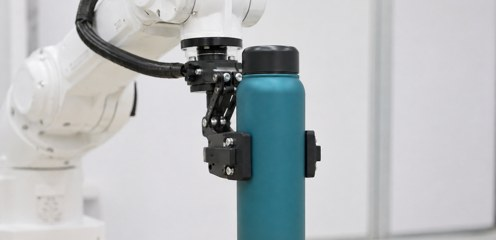
In an era where automation is becoming increasingly essential in industrial settings, a new research initiative is making waves in the realm of robotics. Demonstrating the power of efficient processing, rMuscle - a novel Vision-Language-Action (VLA) inference framework - shows how robots can work faster and smarter while taking on repetitive tasks with remarkable precision.
Understanding the Challenge of Robot Inference Latency
As robots become integral to factory operations, minimizing the delay between their observations of the environment and action execution is crucial. Existing VLA models can sometimes suffer from high inference latency. This downtime can affect the speed and smoothness of robotic movements, potentially derailing assembly lines or other critical operations.
To address this, researchers from the Institute of Parallel and Distributed Systems at Shanghai Jiao Tong University designed rMuscle to harness the concept of muscle memory. Just like humans rely on muscle memory to carry out tasks efficiently without overthinking, rMuscle employs a clever caching mechanism to streamline robot processing.
How rMuscle Optimizes Robot Performance
The core innovation of rMuscle lies in its dual-phase caching system, which dramatically boosts speed by reducing computational load during VLA inference. The framework uses two specific caches: the Context Cache, which minimizes computation during the VLM prefill stage, and the Action Cache, which optimizes memory usage during action denoising.
This design takes advantage of the repetitive nature of tasks robots perform. By recognizing that tasks often have similar observations and action trajectories, rMuscle can reuse previously computed outputs rather than recalculating everything, thus saving valuable time.
Proven Results: Speed and Efficiency
In extensive testing across various platforms, including the RTX 4090 and Jetson Thor systems, rMuscle has achieved speedups ranging from 1.29x to 1.42x compared to other state-of-the-art frameworks, all while maintaining original success rates across diverse robotic tasks. Whether in simulated environments or on physical robots, including dual-arm pick-and-place operations, rMuscle showcased not just speed but consistency in task execution.
This performance enhancement means that robots can perform tasks more efficiently, leading to increased output rates on assembly lines and potentially lowering operational costs for manufacturers.
The Future of Robotics with rMuscle
As automation continues to shape the industrial landscape, frameworks like rMuscle illustrate the intersection of advanced AI with practical applications. The ability to harness previous learning experiences to enhance real-time decision-making represents a significant leap forward in the functionality of robots in manufacturing settings. The potential for robots equipped with rMuscle to adapt and execute tasks flawlessly paves the way for even broader adoption across various sectors.
Overall, as industries strive for greater efficiency and reliability, rMuscle stands out as a pioneering tool that can make robotic operations smoother, faster, and more effective.
Authors: Kaijun Zhou, Zhiyang Li, Le Chen, Jinyu Gu




