
Unlocking Rego Policy Repair: How RegoMender Is Transforming Automated Program Fixes
A new multi-agent framework known as RegoMender is set to revolutionize the automated repair of Rego policies, a critical aspect of cloud-native security. Developed by a team of researchers, RegoMender addresses the long-standing challenges in repairing Rego policies, which are essential for enforcing security and compliance in many applications. With an impressive success rate of 77.9% in test-based semantic evaluation, this framework represents a significant leap forward in software engineering.
The Challenge of Rego Policy Repair
Rego policies, often used in conjunction with the Open Policy Agent (OPA), are complex due to their strict syntax and declarative nature. These policies are not only difficult to write but also challenging to repair when they contain bugs, often requiring manual debugging by experts. This manual process is time-consuming and prone to errors, hampering the efficiency of security operations.
Traditional automated program repair methods largely focus on mainstream programming languages like Java and Python, leaving a gap in approaches tailored to Rego's unique logic and verification processes. As a result, repairing these policies frequently relies on trial and error.
Introducing RegoMender
RegoMender changes the game by using a feedback-guided multi-agent framework that streamlines the repair process. The framework consists of three key components: the Orchestrator, the Analyzer, and the Repairer, which collaborate through a shared blackboard system. This orchestration not only enhances the efficiency of the repair process but also ensures higher accuracy in addressing complex errors.
The Power of RegoBench
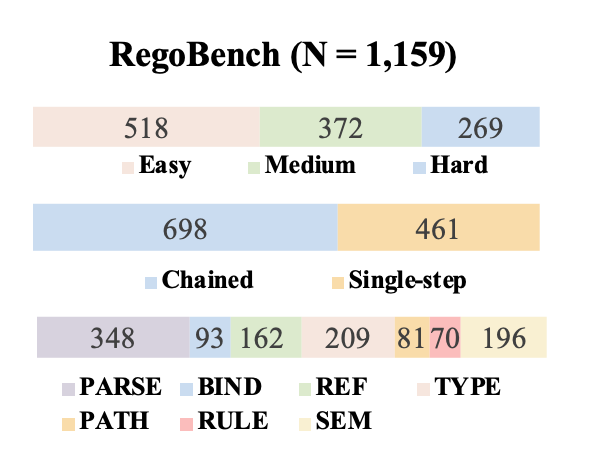
At the heart of RegoMender lies RegoBench, the first automated Rego policy benchmark that includes a dataset of 1,159 real-world defects. This benchmark allows for systematic evaluation and comparison against existing automated repair techniques, providing a robust foundation for the framework's learning and improvement.
A Breakthrough in Performance
In extensive experiments conducted with RegoBench, RegoMender achieved a syntactic success rate of 82.9% and a test-based semantic success rate of 77.9%, outperforming the best existing automated repair methods by a substantial margin. Notably, RegoMender maintains its effectiveness whether the defects are simple or complex, showcasing its adaptability and robustness across various repair scenarios.
This innovative approach not only fixes policies more efficiently but also significantly reduces the risk of introducing new bugs during the repair process. The use of a rollback mechanism prevents stagnation and ensures that the system can recover from unsuccessful attempts, maintaining stability and precision.
Real-World Implications
The application of RegoMender extends beyond theoretical improvements; it has demonstrated practical utility by achieving an 86.4% repair rate on 132 real-world Common Vulnerabilities and Exposures (CVE). This performance highlights the framework's potential to enhance security in practical deployment scenarios, addressing a critical need in software security and compliance.
Future Directions
Looking ahead, the team behind RegoMender aims to expand its functionality to cover other domain-specific languages and refine the framework's ability to handle external dependencies and dynamic states in production environments. This adaptability will elevate the tool's utility in various applications, reinforcing the importance of reliable security measures in an increasingly complex digital landscape.
In conclusion, RegoMender marks a significant advancement in the landscape of automated policy repair, proving that innovative frameworks and tailored solutions can effectively resolve the challenges posed by complex programming environments.
Authors: Ruijie Zhang, Huaxiao Yin, Li Hu, Fanqi Kong, Haozhe Liang, Shaoyin Cheng, Kun Zhang, Bibo Tu


