
Unlocking Reality: How PhysiCalWorld Revolutionizes Physics Calibration in World Models
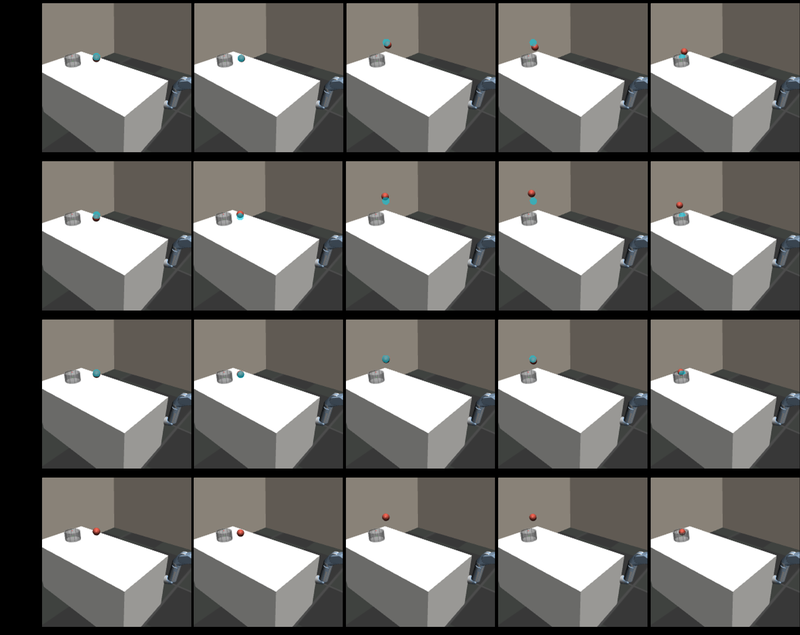
Recent advancements in artificial intelligence have made it possible for machines to understand and predict complex real-world interactions by utilizing world models. The new research paper "PhysiCalWorld: In-Context Physics Calibration for World Models" introduces a groundbreaking method that enhances these models by incorporating actual physics dynamics through a novel in-context learning approach.
The Challenge of Predicting Physics Dynamics
Traditional world models often struggle to interpret a scene based solely on current visual data or a short sequence of past information. This leads to incorrect predictions as they tend to rely on empirical prior knowledge rather than the underlying physics of the environment. The inability to account for factors like mass, friction, and other physical properties can cause predictions to drift away from reality, especially in testing scenarios that introduce novel elements.
Introducing PhysiCalWorld
To counter these issues, the research team developed PhysiCalWorld, a method that calibrates world models to specific physical dynamics in a given scene without the need for intricate fine-tuning or complex analytical models. PhysiCalWorld harnesses the power of in-context prompting, allowing the model to adapt to the unique characteristics of each new environment through exploratory actions.
This approach does not require ground-truth physics parameters nor meticulous simulations, making it a more efficient and scalable solution for real-world applications, such as robotics and autonomous navigation. By compressing the interaction data into a compact “physics descriptor token,” PhysiCalWorld can generate predictions that are aligned with actual observed dynamics in real-time.
A Step Forward in Model Efficiency
The results illustrate that PhysiCalWorld significantly enhances prediction accuracy across various test environments featuring different physical configurations. Compared to competitors that rely solely on visual data or long historical contexts, PhysiCalWorld demonstrates superior stability and consistency, even in situations where the physics parameters differ from those seen during training.
Real-World Applications
The implications of this research extend to numerous fields, including robotic manipulation, where understanding the nuanced dynamics of objects is crucial for success. With PhysiCalWorld, robots can dynamically adapt to their surroundings, leading to improved performance in executing tasks that require precise movements or manipulations.
This innovative framework represents a significant leap toward creating machines that not only see the world but truly understand it in a physical sense, enabling more capable autonomous systems in the future.
As the research progresses, the potential for PhysiCalWorld to revolutionize how machines engage with their environment becomes increasingly evident, paving the way for smarter AI solutions that can predict and react to the complexities of the physical world.
Authors
Yunhao Luo, Wentao He, Yinpei Dai, Hyelin Nam, Hongze Fu, Joyce Chai, Nima Fazeli, Jeong Joon Park


