
Unlocking Quantum Potential: How the Quantum Broker Bridges Cloud Computing Gaps
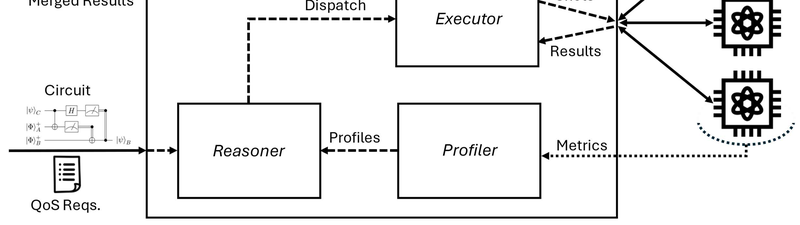
In recent years, quantum computing has transitioned from experimental rigs to accessible cloud-based platforms, posing exciting possibilities for various industries. Yet this transition has uncovered complex challenges revolving around the selection and execution of quantum computations on heterogeneous Quantum Processing Units (QPUs). Addressing these concerns head-on, the research presented in the paper "Quantum Broker: QoS-Aware Distribution of Quantum Computations" introduces a cutting-edge framework that promises to enhance the management of quantum executions across diverse architectures.
A Quantum Leap in Execution Management
The Quantum Broker is an open-source framework engineered to manage quantum executions with an emphasis on Quality of Service (QoS). As quantum processors become more variegated—offering various capabilities, qubit technologies, and operating costs—efficiency in execution management has emerged as a top engineering priority. The Quantum Broker leverages the statistical independence of quantum measurement shots, enabling a single quantum circuit to be executed across multiple QPUs tailored to user-defined QoS constraints.
Understanding QoS and Shot Distribution
At the core of the Quantum Broker's functionality lies the Quantum QoS Specification Language (QQSpec). This domain-specific language empowers developers to set constraints such as cost, execution time, and fidelity, ensuring that their quantum tasks are executed efficiently and effectively, regardless of the complexities posed by different providers and backend technologies. This decoupling of user intent from backend specifics allows for improved adaptability and reproducibility in quantum software implementation.
Two Solver Approaches: A Balancing Act
Equipped with two distinct solver backends, the Quantum Broker applies different methodologies to optimize resource allocation. The mixed-integer linear programming (MILP) solver emphasizes speed and efficiency, providing rapid solutions for simpler, linear problem structures. In contrast, the nonlinear dual-annealing solver excels under complex, nonlinear conditions, albeit with increased computational demands. The flexibility of incorporating both strategies provides a clear advantage, allowing users to select a method that best suits their operational requirements.
Real-World Applications and Future Directions
The experimental results indicate that the Quantum Broker can effectively produce QoS-aware dispatch plans under varying conditions, demonstrating substantial improvements over naive, single-backend allocation methods. A notable end-to-end validation shows that aggregated outputs from distributed executions retain high fidelity, ultimately reflecting the intended circuit objectives.
Nevertheless, challenges persist, including the need for real-time operation validations on live quantum processors, which are anticipated for future iterations of the framework. The authors suggest integrating feedback from ongoing hardware performance into the Broker's profiles to create a nuanced and robust execution strategy moving forward.
Conclusion: The Path Ahead
The Quantum Broker framework signals a pivotal advancement in the management of quantum computational resources. By addressing key challenges in QoS management and execution distribution across heterogeneous quantum backends, it lays the groundwork for more efficient, reproducible, and high-quality quantum computing applications. As the field continues to evolve, strategies like these will be essential in harnessing the true potential of quantum technologies in practical applications.
Authors: {Giuseppe Bisicchia, Alessandro Bocci, Jose Garcia-Alonso, Juan Manuel Murillo, Antonio Brogi}


