
Unlocking Optimization Potential: How Tabular Foundation Models are Transforming Expensive Evolutionary Algorithms
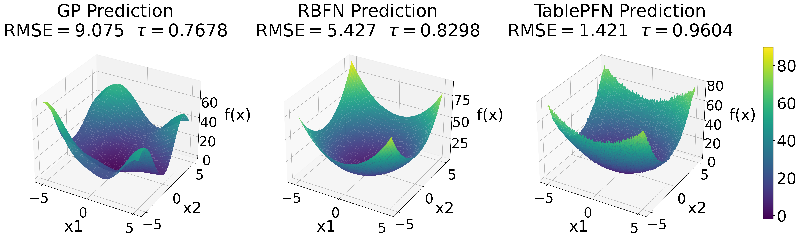
In a groundbreaking study, researchers delve into the fascinating potential of Tabular Foundation Models (TFMs), specifically the Tabular Prior-data Fitted Network (TabPFN), as surrogates in Expensive Optimization Problems (EOPs). Conducted by Lu Han, Jin Wang, and colleagues, this research highlights the transformative role of advanced models in enhancing the efficiency of evolutionary algorithms.
The Challenge of Expensive Optimization Problems
Expensive optimization problems are ubiquitous in real-world scenarios, ranging from aerodynamic shape design in aerospace to circuit tuning in electronic systems. These tasks often require substantial computational power and time for evaluation, which makes them prohibitively expensive. Traditional evolutionary algorithms, while powerful, often suffer from high computational costs due to the number of evaluations required to find optimal solutions.
Enter Surrogate-Assisted Evolutionary Algorithms
To tackle the costs associated with EOPs, researchers have turned to Surrogate-Assisted Evolutionary Algorithms (SAEAs). These innovative approaches substitute costly evaluations with predictions made by surrogate models, significantly reducing the evaluation budget. This study specifically investigates the efficacy of TabPFN as a surrogate model, tapping into its strong predictive capabilities that stem from pretraining on vast synthetic datasets.
A Systematic Analysis of TabPFN’s Performance
The research conducted a comprehensive evaluation of TabPFN across various optimization scenarios, including single-objective, multi-objective, constrained, and mixed-variable problems. The results were striking: in many cases, TabPFN outperformed traditional surrogate models like Gaussian Processes and Radial Basis Function Networks, particularly in complex landscapes characterized by nonlinear and multimodal characteristics.
Promising Applications and Limitations
Despite its strengths, the findings also suggest that TabPFN's effectiveness is highly context-dependent. The study provides vital insights into when and how to deploy this model, emphasizing that while TabPFN may excel in problem scenarios with sufficient offline data, it struggles in data-scarce environments or under complex constraint conditions.
Guidelines for Future Implementations
Importantly, the authors provided practical guidelines for leveraging TabPFN effectively in future algorithm designs:
- Batch Predictions: Use TabPFN's strengths in batch inference to handle large datasets efficiently.
- Data Utilization: Prioritize comprehensive training datasets to enhance predictive accuracy.
- Select Models Wisely: Choose surrogate models based on landscape complexity; TabPFN is best for intricate landscapes.
- Customize Model Management: Tailor model management strategies to exploit TabPFN's unique characteristics effectively.
Conclusion: A New Era in Optimization
This research signifies a leap forward in the integration of machine learning and evolutionary strategies for optimization. As the capabilities of models like TabPFN continue to evolve, their implications for solving EOPs could reshape how industries approach complex problem solving in the future.
Overall, the study bridges the gap between advanced machine learning techniques and practical evolutionary algorithms, paving the way for innovative solutions across various domains.
Authors: Lu Han, Jin Wang, Yuchen Li, Haoran Gu, Shulei Liu, Ziyang Shi, Wenao Lu, Handing Wang (Senior Member, IEEE)




