
Unlocking New Frontiers in AI: How ALPS Is Transforming Visual Understanding and Interaction
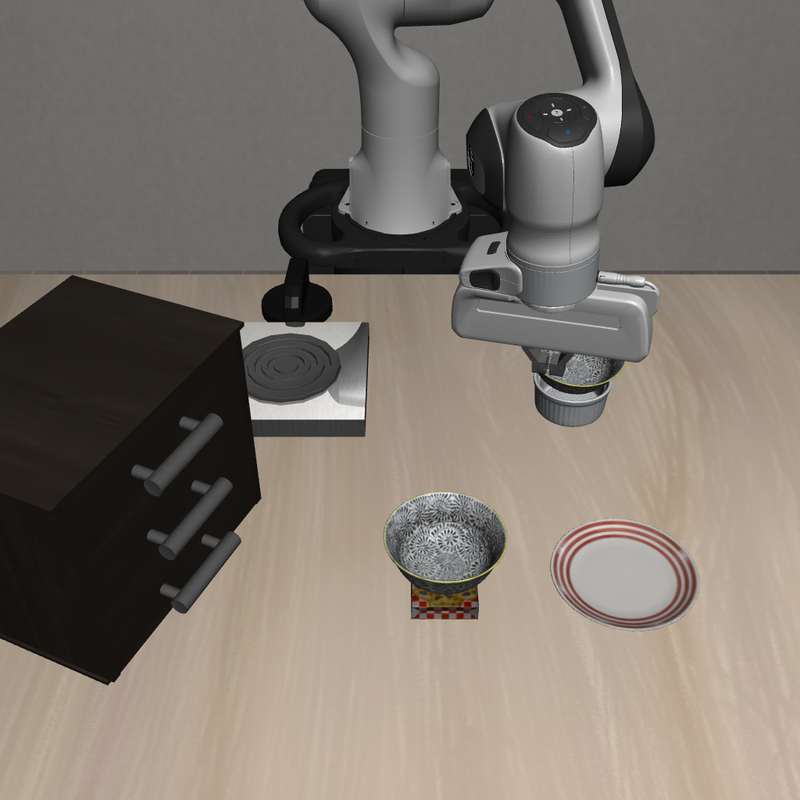
A groundbreaking approach to visual understanding has emerged in the form of ALPS (A Language-aligned, Pixel-renderable State encoder), a state-of-the-art pretrained visual state encoder developed by researchers at the University of California, Santa Cruz and Google. This innovative model tackles a critical challenge in artificial intelligence: how to enable a single visual representation to effectively support predictions, instructions, and visual inspections across multiple domains.
The ALPS Concept: A Unified Approach
Traditionally, most visual encoders excel in just one or two areas—such as language alignment or pixel reconstruction—leaving a significant gap in performance when tasked with more complex operations. ALPS seeks to bridge this gap by integrating physical state information, native language alignment, and pixel reconstruction into a singular, cohesive framework. This unique combination empowers ALPS to enhance learning and decision-making processes for AI systems operating in dynamic environments.
Training ALPS: A Two-Stage Process
The training of ALPS occurs in two distinct stages. The first stage focuses on establishing a shared representation that aligns language with visual features, while simultaneously enhancing pixel accuracy through reconstruction and spatial objectives. This is achieved using large datasets of still images and text, effectively teaching the model to understand visual context and meaning.
In the second stage, ALPS undergoes cross-view self-distillation, a sophisticated refinement process that further sharpens its understanding of states in varied contexts through predictions based on augmented views. This dual-phase training model significantly reduces error rates in state probing, affirming ALPS's superiority over existing encoders.
Performance Achievements
ALPS has set impressive benchmarks in various evaluations. It has achieved the lowest aggregate LIBERO state-probe error among ViT-B models and demonstrated remarkable capabilities in planning and world-model prediction tasks. Its comprehensive training methodology outperforms many contemporary models, including V-JEPA 2, which operates on significantly larger parameter sizes.
ALPS not only excels in internal consistency and accuracy but also shows a strong aptitude for real-world application, particularly in robot manipulation tasks where a profound understanding of both the physical and abstract elements of the environment is crucial.
Real-World Impact: Visual Pretraining and Beyond
The implications of ALPS extend beyond academia into practical applications in robotics, augmented reality, and autonomous systems. By providing AI with a robust understanding of visual contexts combined with language cues, ALPS enables more intuitive and flexible interactions between humans and machines. This model represents a leap forward in the capabilities of AI systems, setting the stage for enhanced functionalities in various technological domains.
As we move toward a future increasingly reliant on AI assistance, advancements such as ALPS could redefine our interaction paradigms, enabling machines to better understand, predict, and respond to the complexities of the human environment.
For more insights and detailed performance metrics, you can refer to the complete research paper by Yanqing Liu et al. at ucsc-vlaa.github.io/ALPS.


