
Unlocking Investment Success: The Hidden Power of Directionally Correct Expert Views in Portfolio Optimization
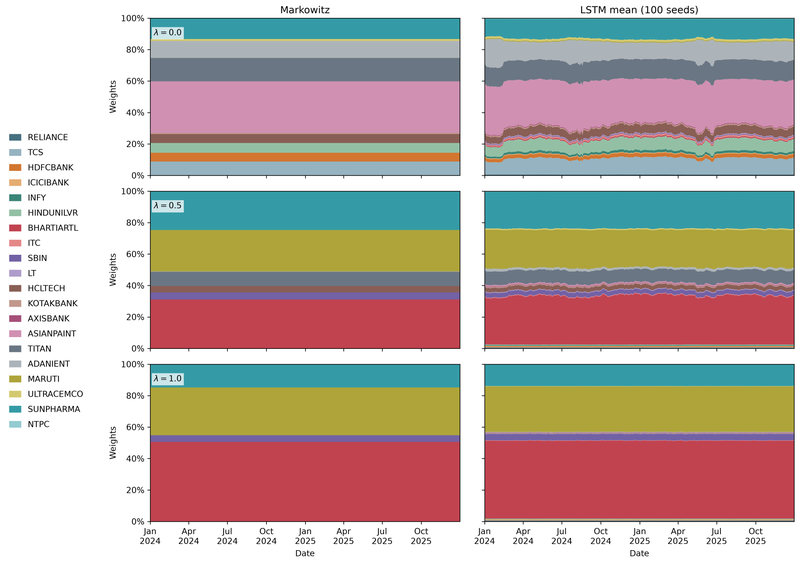
In a groundbreaking study from Ashoka University, researchers Ojas Kumar, Sreejit Dey, Sarvesh R. Iyer, and Sandeep Juneja reveal an innovative approach to portfolio optimization that could reshape how investors make decisions. Their research explores the value of integrating directionally correct expert views into traditional investment models, particularly the Markowitz framework, for enhanced performance in financial markets.
The Challenge of Portfolio Optimization
Portfolio optimization has long been a complex domain, relying on historical data to predict asset performance. The widely used Markowitz model, developed by Harry Markowitz, focuses on maximizing returns while minimizing risk but struggles with accuracy due to reliance on estimated future means and covariances, which can be highly sensitive to errors. This sensitivity leads to potential pitfalls where small mistakes in predictions can result in vastly different outcomes.
Integrating Expert Insights
The researchers drew inspiration from the Black–Litterman framework—a model that enhances traditional approaches by incorporating expert opinions into quantitative analysis. Their study showcases that even a small amount of directionally correct information from experts can significantly enhance portfolio allocations and thus investment decisions. This means that even if experts are not completely right, their insights can guide better choices.
Demonstrated Benefits
One of the key findings of the research is the concept of the Sharpe Ratio, a measure used to evaluate the risk-adjusted performance of an investment. The researchers demonstrated that as the accuracy of expert views improves, the Sharpe Ratio also increases, leading to better-performing portfolios. Remarkably, they found that simpler models of portfolio optimization could perform as well as more complex machine learning models, provided that the expert insights were incorporated successfully.
Empirical Evidence and Future Implications
The study's empirical results illustrate a stable relationship between the directionally correct views and portfolio performance, emphasizing the practicality of integrating expert insights into both classic Markowitz-type models and newer machine learning approaches. This research paves the way for a promising future where portfolio management could evolve from solely mathematical computations to a more hybrid model that includes human expertise.
Moving forward, the research team plans to address the challenge of generating these expert views in real time, ensuring that they are applicable and actionable for investors at all levels. The implications of this study reach beyond academics, potentially offering investors a new tool to refine their strategies and enhance their investment outcomes.
In conclusion, by recognizing the value of directionally correct expert views within investment frameworks, this research signals a shift towards smarter, more informed investing practices that leverage both quantitative data and qualitative insights.


