
Unlocking Industrial Optimization: How Reduced-Space Multi-Fidelity Bayesian Approaches Revolutionize Process Simulations!
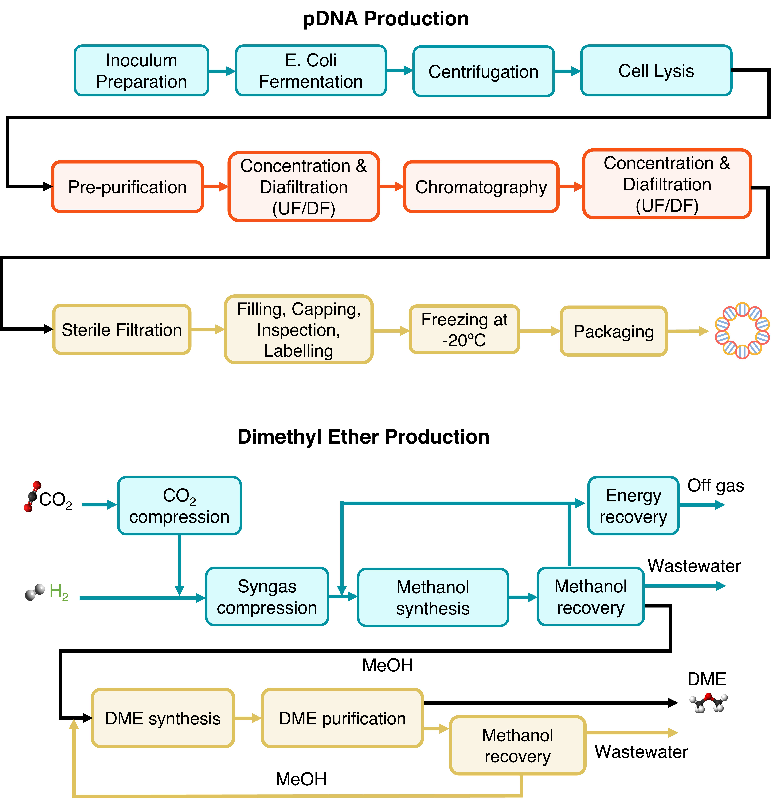
In the fast-paced world of industrial process design and optimization, the need for efficient strategies has never been more pressing. A groundbreaking research paper by Niki Triantafyllou and colleagues from Imperial College London introduces a novel framework known as Reduced-Space Multi-Fidelity Bayesian Optimization (RS-MFBO). This innovative methodology promises to tackle the challenges associated with optimizing complex industrial processes while significantly reducing computational costs.
The Challenge of Process Optimization
Industrial processes, such as those used in biopharmaceuticals and chemical synthesis, often require intricate simulations that can be both time-consuming and costly. Traditional optimization techniques frequently struggle to efficiently explore the vast design spaces due to the computational burden imposed by high-fidelity simulations. Recognizing this challenge, the authors developed RS-MFBO, which leverages multi-fidelity approaches to optimize these processes efficiently.
What is RS-MFBO? An Explanation in Layman’s Terms
At its core, RS-MFBO combines different levels of simulation accuracy—known as fidelities—to make the optimization process more efficient. Think of it as using a quick estimation method to find potential solutions before investing time in a detailed, accurate method to refine those solutions. The framework integrates a Global Sensitivity Analysis (GSA) approach to identify which variables are most influential in the process, allowing the optimization to focus on key factors while discarding less impactful ones.
Key Innovations and Methodology
The RS-MFBO framework employs a few innovative strategies:
- Global Sensitivity Analysis: GSA helps in identifying which input variables significantly affect the output, allowing for dimensionality reduction.
- Multi-Fidelity Gaussian Process: This model captures correlations between low-cost approximations and expensive high-fidelity evaluations, streamlining the optimization process.
- Cost-Aware Acquisition Strategy: By adaptively guiding sample allocation based on costs and expected improvements, RS-MFBO ensures efficient use of computational resources.
Validation and Results
The framework was validated using two industrial case studies: a plasmid DNA bioprocess in SuperPro Designer and a green fuel synthesis plant in Aspen HYSYS. The results were remarkable:
- RS-MFBO achieved competitive optimization performance while utilizing 65-80% fewer high-fidelity simulator evaluations compared to traditional methods.
- In the plasmid DNA case, it converged to optimal solutions within the first few evaluations, something that typically would take much longer using standard techniques.
- The approach demonstrated its capacity to navigate complex optimization landscapes efficiently, significantly speeding up the process.
The Bigger Picture: Impact on the Industry
This research opens the door for more sustainable and cost-effective methods in industries dependent on complex simulations. By reducing the number of high-fidelity simulations needed, RS-MFBO not only cuts costs but also lessens the environmental impact associated with resource-intensive computational processes.
Conclusion: A Step Toward the Future
In summary, the Reduced-Space Multi-Fidelity Bayesian Optimization framework represents a significant advancement in the field of process optimization. By balancing efficiency with accuracy, this innovative approach stands to benefit a wide range of industrial applications, paving the way for smarter, more efficient process design in the future.
Authors: Niki Triantafyllou, Andrea Bernardi, Maria M. Papathanasiou
{niki.triantafyllou20, a.bernardi13, maria.papathanasiou11}@imperial.ac.uk




