
Unlocking Cybersecurity: How a Digital Twin is Reinventing Vulnerability Detection in AArch64 Machine Code
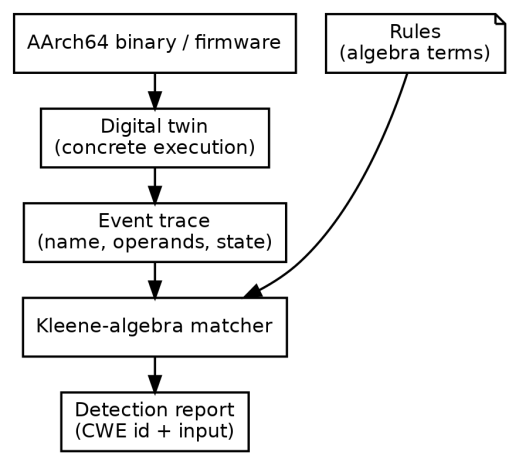
A recent research paper from the V. M. Glushkov Institute of Cybernetics introduces a groundbreaking method for detecting vulnerabilities in AArch64 machine code using an innovative technology known as a digital twin. This advance could significantly improve the way cybersecurity experts identify and guard against hidden threats in software, especially when source code is not available.
What is a Digital Twin?
A digital twin is essentially a virtual replica of a physical system or process. In the context of this research, it closely mimics the execution of AArch64 code, which is widely used in mobile and embedded systems. This allows for a detailed analysis of the machine's state—including its registers, processor flags, and memory—without needing access to the actual source code.
Challenges in Vulnerability Detection
Vulnerability detection in machine code poses unique challenges. Unlike high-level programming languages where variables and functions are easily identifiable, machine code consists of low-level instructions that require precise and complex analysis. Vulnerabilities often manifest not as single faulty instructions but as intricate patterns of operations that can include issues like integer overflow, null pointer dereferencing, and buffer overflows.
A Novel Solution: Kleene Algebra and Finite Automata
The researchers’ solution employs a novel combination of techniques. By using Kleene algebra with tests to represent vulnerabilities and finite automata for analyzing instruction patterns in real-time, the digital twin can effectively detect not only isolated flawed instructions but also multi-step execution paths that lead to vulnerabilities. This allows for a much more comprehensive detection capability compared to existing methods.
Experimental Validation
The system was rigorously tested against known vulnerabilities, specifically targeting classes defined in the Common Weakness Enumeration (CWE). The experimental results were promising, showing successful identification of vulnerabilities like integer overflow, null pointer dereference, and heap buffer overflow, without any false positives on safe code.
The Future of Cybersecurity
This research paves the way for enhanced vulnerability detection techniques in the realm of machine code. With plans for extending the rule set to cover more vulnerability classes and potentially integrating machine learning to refine detection capabilities, the implications for software security are significant. This could streamline the identification process for developers and security professionals alike, ultimately leading to safer software environments.
Conclusion
By marrying the concepts of digital twins and formal symbolic reasoning, this research offers a proactive step towards robust cybersecurity frameworks. The method's ability to operate directly on machine-level code while producing understandable results signifies a major leap forward in managing software vulnerabilities. As the tech landscape continues to evolve, innovations like these will be vital in keeping systems secure.
Authors: O. Mostovyi, D. Symonov




