
Unleashing the Future: FaultGene Transforms How Autonomous Vehicles Handle Hardware Failures
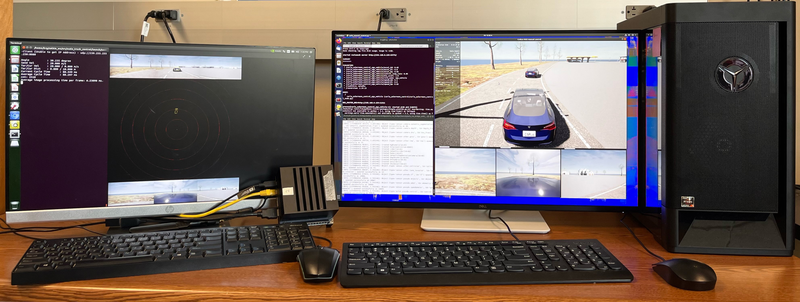
Autonomous vehicles are revolutionizing transportation, but ensuring their reliability under various fault conditions is a monumental challenge. A groundbreaking new framework called FaultGene, from researchers at the University of California, Irvine, aims to automate the testing of autonomous driving systems, particularly under the stressful conditions of hardware failures, offering a massive efficiency boost in validated testing scenarios.
The Challenge of Testing Autonomous Systems
As autonomous driving systems (ADS) become more complex, traditional testing approaches struggle to replicate the unexpected faults that can occur in real-world situations. Physical road testing is costly and often impractical, while simulation-based testing cannot fully simulate the impacts of hardware-specific behaviors. This gap motivated the introduction of hardware-in-the-loop (HIL) testing, where the driving algorithms are tested on actual hardware within a simulated environment.
Introducing FaultGene: AI-Powered Test Generation
FaultGene utilizes a sophisticated approach involving large language models (LLMs) to automatically generate fault-augmented tests for HIL scenarios. Unlike manual efforts that can be time-consuming and inconsistent, FaultGene can produce executable test cases quickly and at scale. This automated process effectively reduces the time required for preparing fault scenarios by an astonishing 72 times, from an estimated 12 hours to just 10 minutes for each fault type.
How FaultGene Works
FaultGene operates by taking a baseline driving scenario and a structured specification of faults—such as sensor malfunctions or computational errors—and generating corresponding fault-augmented test cases. The system employs a two-phase approach: first, it generates initial scenarios; second, it refines these based on execution feedback from HIL tests, ensuring that the faults manifest correctly in simulations.
In simple terms, by using FaultGene, engineers can quickly create realistic tests that mimic failures in vehicle sensors and computing systems, allowing developers to better understand how their vehicles will handle real-world hardware failures.
Benefits Beyond Testing
The implications of FaultGene extend beyond just testing efficiency. By consistently generating high-quality tests that account for the nuances of actual hardware performance, the framework promises to improve the overall safety and reliability of autonomous vehicles. It retains the capacity to expose crucial fault-sensitivity trends—which will help developers pinpoint weaknesses in vehicle systems and build more robust software capable of dealing with real-time issues.
A Major Step Forward for Autonomous Vehicles
The development of FaultGene represents a significant technological advancement in the realm of autonomous vehicle testing. As the industry moves towards more advanced and autonomous systems, frameworks like FaultGene will be invaluable in ensuring that these vehicles are not only capable but are also safe and reliable under a range of potential fault conditions.
In conclusion, FaultGene is shaping how safety is validated in autonomous vehicles. As this technology continues to evolve, we can expect a future where autonomous driving systems are not only smarter but also more dependable, paving the way for broader acceptance and integration into everyday life.
Authors: Chaoran Yuan, Fadi Kurdahi


