
Unleashing Quantum Potential: The Flopping-Mode Spin Qubit in Germanium on a Path to Ultra-Low Power Operations
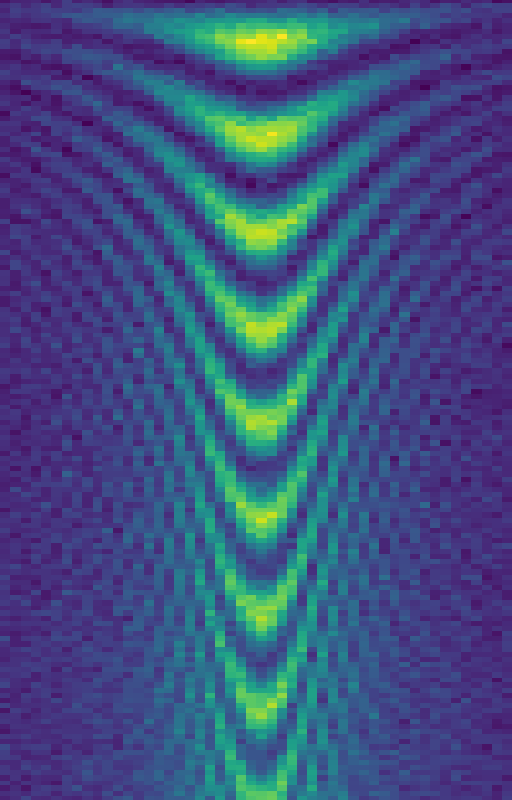
Recent advancements in quantum computing have shed light on the potential of flopping-mode spin qubits, particularly in modifying how we approach power consumption and operational fidelity. A groundbreaking study presents findings on an innovative hole-spin qubit system utilizing germanium-based quantum dots (QDs), addressing some of the pressing challenges faced in scalable quantum architectures.
The Challenge of Conventional Spin Qubits
Traditionally, qubits operated using electric dipole spin resonance (EDSR) face significant challenges, primarily involving high operational power requirements. These demands often lead to excessive heat generation and interference (crosstalk) among nearby qubits—issues that could jeopardize the practicality of larger quantum systems. Discovering a solution that reduces this power consumption while enhancing fidelity became a critical objective in quantum research.
A Revolutionary Approach: Flopping-Mode Qubits
The study introduces a flopping-mode qubit based in a double quantum dot configuration, which allows the spin of a single charge carrier to be spread across two quantum dots. This unique structure contributes to increased efficiency in electrical driving. The researchers achieved remarkable results, showcasing a single-qubit gate fidelity of up to 99.76% utilizing just −52 dBm drive power at a mere 5 mT magnetic field. Such efficiencies not only signify substantial improvements in operational capabilities but also introduce a new paradigm in low-power quantum processing.
Putting it to the Test: Achievements and Measurements
Through meticulous experiments, the researchers mapped out coherence sweet-spots as a function of magnetic field orientation, capturing coherence times that reached an impressive T*2 = 1.4µs and a Hahn echo coherence time (THahn2) of 11.5µs. These findings indicate that the flopping-mode qubit significantly mitigates the impacts of charge noise, previously a major challenge in maintaining qubit stability.
Looking Forward: Implications for Quantum Technology
The advancements detailed in this research could revolutionize scalable quantum computing architectures. The ultra-low-power requirements and high-fidelity operations achieved by the flopping-mode qubit represent a promising avenue toward practical quantum systems capable of executing high-performance tasks across various computational frameworks. With power demands shrinking significantly—two orders of magnitude lower than conventional qubit operations—the study suggests a viable future for large-scale quantum integration.
The Future is Bright for Quantum Computing
As the research team elucidates, this progress emphasizes the importance of optimizing both power efficiency and operational fidelity within the domain of quantum computing. By adopting these innovative qubit designs and techniques, scientists are paving the path for larger, more efficient quantum systems that could potentially address some of the most significant challenges facing the future of computational technology. The journey of the flopping-mode qubit in germanium holds exciting implications for the next generation of quantum devices and their myriad applications.
Authors: {Alexei Orekhov, Wonjin Jang, Pan Zhang, Konstantinos Tsoukalas, Fabian Oppliger, Franco De Palma, Elena Acinapura, Younghun Ryu, Inga Seidler, Lisa Sommer, Leonardo Massai, Felix J. Schupp, Matthias Mergenthaler, Stefano Bosco, Patrick Harvey-Collard, Pasquale Scarlino}




