
Unleashing Efficiency: How FastGFDs is Revolutionizing Graph Functional Dependency Validation
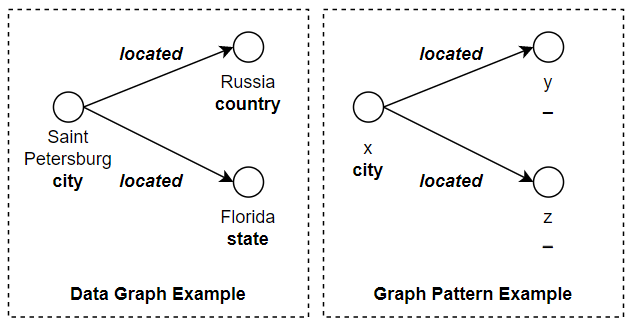
A team of researchers from Saint-Petersburg University has introduced a groundbreaking algorithm known as FastGFDs, which significantly enhances the validation of Graph Functional Dependencies (GFDs). This recent study aims to open the doors to GFD validation on consumer-level PCs, making advanced graph data analysis accessible to a wider audience.
Understanding Graph Functional Dependencies
Graph Functional Dependencies are a crucial concept in the realm of graph databases, helping to capture the relationships and structures within complex data. They allow for the identification of inconsistencies and the formulation of integrity constraints, which can be essential in various applications, including social network analysis and database management. However, validating these dependencies has traditionally been an expensive computational task, demanding formidable resources.
The Challenge of GFD Validation
The process of GFD validation is notably slow and resource-intensive, with the algorithm's previous implementations relying heavily on parallel processing in high-performance environments. In fact, research indicated that locating suitable subgraphs accounted for a staggering 99% of the runtime, leaving only a fragment of the time for actual validation checks. This bottleneck presented a significant hurdle for real-world applications.
The Breakthrough of FastGFDs
FastGFDs tackles this inefficiency by utilizing a sequential approach that operates on the entire graph, contrasting with the parallel schemes of the past. This new method leverages advanced graph matching techniques, including Core-First Decomposition and a Compact Path Index (CPI). By streamlining the process, FastGFDs demonstrated remarkable performance improvements, achieving up to 3 times faster validation times compared to earlier parallel algorithms.
A Step Towards Accessibility
One of the most exciting aspects of this research is the emphasis on making GFD validation feasible for standard personal computers. FastGFDs has been designed with a focus on compatibility with low-end, single-node environments, which opens the door for researchers and practitioners without access to high-end computing resources to analyze complex graphs efficiently.
Impressive Results and Future Directions
Initial experiments have shown that FastGFDs not only increased validation speed, yielding an average of 2.6 times the performance of its predecessors, but also substantially reduced memory consumption by a factor of five. The implementation is available as open-source code, ensuring that the academic and professional communities can benefit from this advancement.
The research team plans to continue refining the algorithm, exploring the potential of integrating CPI with existing parallel frameworks and enhancing the scalability of graph pattern matching algorithms. This novel approach promises to bring significant advancements to the field of graph data analysis without necessitating expensive computational setups.
In summary, FastGFDs represents not just an algorithm improvement, but also a shift towards making cutting-edge data analysis tools more widely accessible.
Authors: Anton Chernikov, Yurii Litvinov, Kirill Smirnov, George Chernishev




