
Uncovering the Power of Action Chunking: How it Transforms Robotic Control Through Delayed Predictions
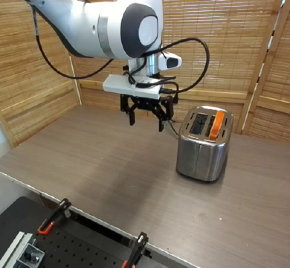
A groundbreaking study delves into the phenomenon of action chunking in robotic control, revealing why predicting and executing sequences of actions significantly enhances performance compared to traditional methods. This innovative approach not only boosts efficiency but also enriches the understanding of human-like behavior in robots, offering a new horizon for artificial intelligence in real-world applications.
The Heart of Action Chunking
Action chunking is a method where robots predict and carry out multiple actions at once, rather than tackling one action at a time. This technique has been shown to improve the effectiveness of robotic control, but the mystery behind its success has been largely unexplored—until now. The research conducted by a collaborative team from Politecnico di Milano and UC Berkeley seeks to clarify the underlying mechanisms of this technique.
Moving Beyond Existing Hypotheses
Previous theories suggested that action chunking helped through various means: enhancing temporal consistency, reducing the horizon of actions, and improving representation learning. However, this new study finds these factors alone insufficient to explain the phenomenon. Instead, it highlights two impactful elements: greater non-Markovian expressivity and reduced compounding error.
Simply put, by employing "delayed policies," robots can effectively predict actions using past observations, capturing the crucial non-Markovian behavior without the burdensome complexity of traditional chunking methods.
The Concept of Implicit Ensembling
One of the most significant revelations from this research was the concept of "implicit ensembling." By learning diverse temporal relationships within the action chunking process, robots behave similarly to an ensemble of multiple policies, thus enhancing their robustness and overall generalization capability in various contexts.
The study also demonstrates that this implicit ensemble effect can be fully harnessed without explicitly using action chunking, further optimizing the robotic training process.
Empirical Evidence from Simulations and Real-World Tests
Through rigorous experiments across both simulated environments and real-world robotic tasks, the research team showcased that the performance achieved through delayed policies often rivals, if not surpasses, that of conventional action chunking. The results imply that while action chunking remains a powerful technique, strategies focused on leveraging past observations can yield significant performance improvements.
A Glimpse Into the Future
This study not only pushes the boundaries of robotic learning but also opens up exciting potential for future research. By amplifying the benefits of action chunking through explicit policies and exploring adaptive selection of past observations, researchers are poised to refine how robots learn and operate in complex environments.
In conclusion, the findings from this research mark a pivotal shift in the understanding of action chunking in robotic control, revealing that enhancing predictive capabilities based on delayed actions can substantially elevate performance while easing complexity.
**Authors:** Filippo Lazzati, Kyle Stachowicz, William Chen, Alberto Maria Metelli, Andrew Wagenmaker, Sergey Levine




