
Transforming Taxation: How MTS-OB Could Close the Massive £12.1 Billion VAT Gap
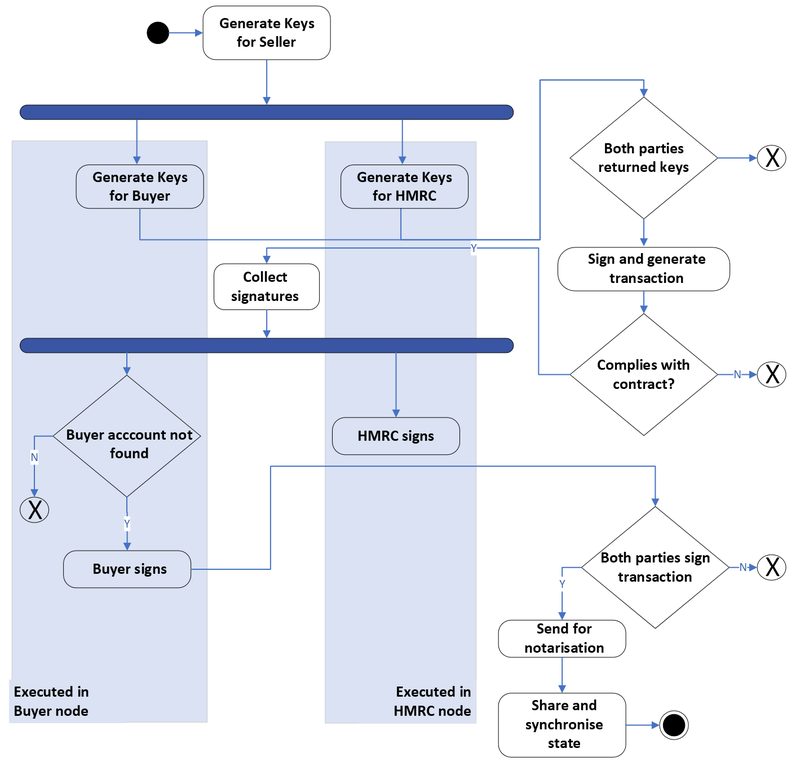
As governments grapple with dwindling tax revenue and rising fraud, a groundbreaking research study led by a team from Brunel University London has proposed a revolutionary solution to the UK's VAT compliance issue. Their new architecture, dubbed Making Tax Smart with Open Banking (MTS-OB), aims to automate value-added tax (VAT) collection in real time, potentially reducing the UK's staggering VAT gap—which currently costs taxpayers an alarming £12.1 billion annually.
Understanding the VAT Gap
The VAT gap refers to the difference between the VAT owed to the government and what is actually paid, often due to errors, fraud, and evasion. The UK tax authority, Her Majesty's Revenue and Customs (HMRC), has been on the frontline battling this issue, but traditional tax collection methods are becoming increasingly ineffective in the digital age. With digital technologies evolving rapidly, there is a pressing need to innovate tax compliance systems to better align with modern financial transactions.
A Smart Solution: MTS-OB Architecture
The MTS-OB architecture presents a novel approach: integrating tax compliance directly into payment systems using Distributed Ledger Technology (DLT) and Open Banking APIs. By viewing money not just as a currency but also as a real-time information sensor, MTS-OB seeks to automatically enforce VAT compliance at the moment of transaction, minimizing human error and opportunities for tax evasion.
How Does It Work?
What makes MTS-OB particularly compelling is its seamless operation within existing banking infrastructure. It acts as an invisible layer between payment processing and tax authorities, utilizing secure Open Banking APIs to verify transactions and ensure VAT is collected in real time. This design not only preserves the integrity of traditional financial systems but also leverages existing transaction data, enhancing transparency and accountability.
According to the research, this innovative framework can maintain operational stability even as the volume of transactions increases, demonstrating its scalability. The findings reveal that not only does the latency of transactions increase predictably with the number of clients, but throughput stabilizes, indicating that the system can efficiently handle a high volume of VAT-related transactions.
Future Implications
The implications of this research extend beyond just VAT. The framework could be adapted for other taxes, such as income tax, carbon taxes, or even the construction industry tax, providing a blueprint for a more efficient and transparent tax administration in the UK and potentially around the globe.
As the digital economy continues to evolve, failing to adapt our taxation systems could lead to significant revenue losses for governments. The MTS-OB model stands as a hopeful vision for a future where tax compliance is built into the fabric of financial transactions, making it “hard to get tax wrong”—a win-win for taxpayers and governments alike.
Final Thoughts
With significant potential to revolutionize tax compliance and close the VAT gap, the MTS-OB architecture is more than just a technological advancement; it is a transformative approach that could redefine the relationship between citizens, businesses, and tax authorities. As discussions around digitization in finance continue, the legacy of this research may pave the way for a new era of tax compliance that is efficient, transparent, and resilient.
Authors: {Panos Louvieris, George Ioannou, Gareth White}


