
Transforming Reinforcement Learning: A Novel Model-Driven Framework for Generating Training Environments
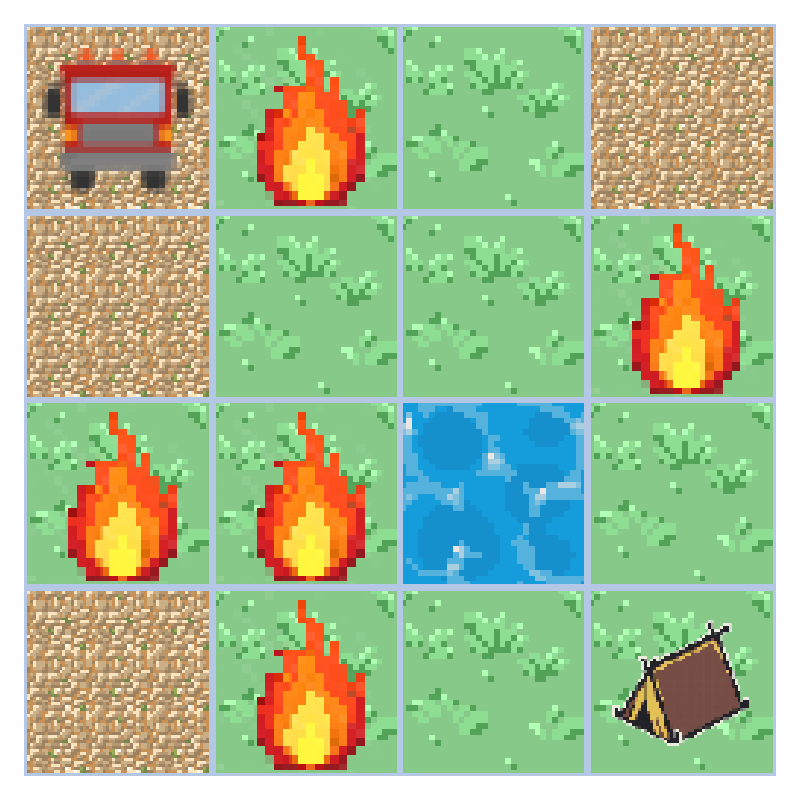
A research paper presented by Xiaoran Liu and Istvan David from McMaster University introduces a groundbreaking model-driven approach aimed at simplifying the development of families of reinforcement learning (RL) environments. With reinforcement learning gaining traction as a popular method for training intelligent agents, the need for effective, scalable virtual training settings has never been more critical.
The Challenge of Training RL Agents
Training RL agents typically requires exposure to a variety of environments to promote generalization and avoid reliance on memorization. These environments can differ slightly but significantly in structure, and creating a diverse set necessitates considerable manual effort. Liu and David’s research seeks to automate this labor-intensive process, streamlining the generation of multiple environment variants.
A Model-Driven Approach
The authors propose employing a hybrid genetic algorithm—an optimization method blending global search for possible solutions with local search refinements. This innovative strategy serves to generate a family of training environments that are both sufficiently diverse and similar enough to facilitate effective learning.
In their approach, the initial environment is created based on requirements defined by a reinforcement learning expert. The complexity of the generated environments is managed through model transformations—rules for modifying existing environments—enabling the rapid production of new training conditions.
Applications and Results
Demonstrating the efficacy of their method, the researchers applied their model to a wildfire mitigation scenario, showing improved agent performance through curriculum learning, where agents are exposed to gradually more complex tasks. Not only did the generated environment families enhance learning efficiency, but they also showcased a significant reduction in the need for human intervention, crucial for practical deployments of RL systems.
Implications for the Future
This research underscores the utility of model-driven engineering in the machine learning realm, potentially paving the way for more advanced and automated methods of training agents. Liu and David's work highlights the ongoing demand for innovations in RL training methods, suggesting future directions towards improving learning paradigms such as domain randomization and multi-task reinforcement learning.
As artificial intelligence technologies continue to evolve, the implications of this research could resonate across sectors, leading to more robust and adaptable control systems capable of operating in complex, dynamic environments.
For further details, refer to the original paper presented at the ACM/IEEE 29th International Conference on Model Driven Engineering Languages and Systems (MODELS '26).
Authors: Xiaoran Liu, Istvan David




