
Transforming Metal Additive Manufacturing: The Physics-Driven Approach to Predict Inconel 718 Texture
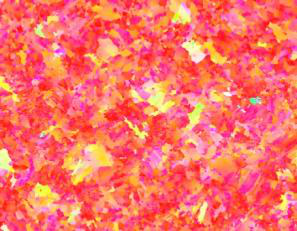
In the realm of laser powder bed fusion (LPBF), the ability to accurately predict the crystallographic texture of materials like Inconel 718 is paramount. A recent study conducted by a team from Virginia Tech introduces a sophisticated two-stage framework that blends physics-based modeling with advanced machine learning techniques to enhance texture prediction reliability. This innovative approach promises to bridge the gap between process variations and material performance, enabling better quality control in additive manufacturing.
The Challenge of Crystallographic Texture Prediction
Additive manufacturing techniques like LPBF involve intricate and variable processing conditions that directly influence the crystallographic texture of the produced materials. The texture significantly affects the mechanical properties of materials, especially in complex components used in aerospace and other high-stakes applications. However, traditional black-box models often fall short in capturing these relationships, leading to unpredictable material behavior.
A Two-Stage Framework for Enhanced Reliability
The researchers developed a two-stage modeling approach to tackle these challenges effectively. The first stage maps the process parameters—such as laser power, scan speed, hatch spacing, and focus offset—onto melt pool characteristics. This crucial step lays the foundation for understanding how the processing conditions influence material properties. The second stage combines this foundational knowledge with a machine learning model (specifically a random forest) to predict crystallographic texture, particularly the <001> alignment along the build direction.
Innovative Solutions: Conformal Prediction and Applicability Domains
One of the standout aspects of this study is the introduction of a novel applicability domain framework that helps manage uncertainties. Instead of pushing predictions blindly, the model assesses whether the current conditions align with previously observed data. This is done by a k-nearest-neighbor weighting, which adjusts predictions based on data coherence, enabling reliable outputs even when data support weakens.
The addition of confounding intervals ensures that any prediction made outside established parameters is rightly withheld, providing transparency and reliability in predictions. In their evaluations, the model exhibited impressive accuracy, achieving an R² value of 0.778 in controlled environments, vastly outperforming traditional models.
Real-World Applications and Future Impact
This innovative framework not only promises to enhance understanding in texture prediction but also opens new avenues for application in various fields, particularly in the aerospace industry where materials are subject to extreme conditions. The results indicate that by linking processing details directly to material properties, manufacturers can minimize risks, iterate designs faster, and produce components that adhere to stringent safety and performance requirements.
As industries increasingly turn to additive manufacturing for complex geometries, the implications of this research are profound. By establishing a reliable model that predicts crystallographic behavior based on processing conditions, engineers can design more robust and effective components with confidence, ultimately leading to a new era of innovation in material science and engineering.
This transformative approach exemplifies how integrating physics with machine learning can address complex manufacturing challenges, paving the way for significant advancements in the field.
Authors: Yisheng Lu, John Riris, Jie Song, Yao Fu, Jie Chen




