
Transforming Joint Therapy: The Revolutionary Role of Cytoskeleton-Inspired Nanolipogels in Osteoarthritis Treatment
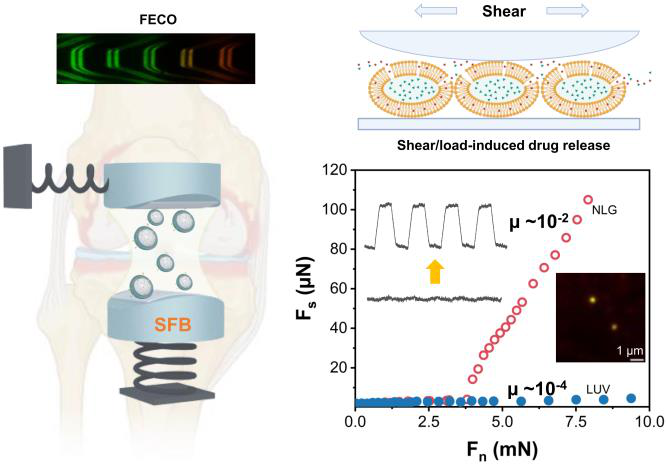
Researchers from the Weizmann Institute of Science have made significant strides in addressing osteoarthritis, a debilitating joint disease affecting millions worldwide. Their recent study explores the development of a novel class of delivery vehicles called cytoskeleton-inspired nanolipogels (NLGs). These are designed not just to deliver therapeutic agents effectively but also to provide superlubrication at joint surfaces, thus potentially alleviating pain and enhancing mobility for those suffering from this condition.
The Challenges of Osteoarthritis Treatment
Osteoarthritis occurs when joints undergo wear and tear, leading to pain, inflammation, and decreased mobility. Traditional treatments often involve intra-articular injections of liposomes, which can effectively reduce friction in joint surfaces, but their clinical application has been hindered by stability issues under mechanical stress. The new study offers a promising solution by creating NLGs that exhibit both stability and lubrication.
What Are Nanolipogels?
Nanolipogels are innovative delivery systems that blend liposomes with nanogels. The researchers designed these structures to mimic the cytoskeleton—the complex framework within cells that provides mechanical support. By combining the dynamic properties of nanogels with the well-established lubricating ability of liposomes, these NLGs can better withstand the physical stresses inherent in joint movements.
A Breakthrough in Lubrication and Drug Delivery
The research highlights the NLGs' ability to significantly reduce friction at joint surfaces, with a coefficient of friction as low as 10-4 at pressing loads up to 2 MPa, which is comparable to forces experienced in human joints. This remarkable property is attributed to a highly-hydrated lipid layer that acts as a lubricant, facilitating smoother joint movements and minimizing wear on cartilage.
In addition to their lubricating properties, the NLGs serve as effective drug delivery systems. As they slide under pressure, the nanogels release encapsulated therapeutic agents, highlighting their dual function in treating osteoarthritis: reducing friction while simultaneously delivering medications directly into the joint area.
Future Implications for Osteoarthritis Therapy
The findings from this study suggest that NLGs possess the potential to revolutionize the management of osteoarthritis. By effectively combining lubrication with drug delivery, these nanostructures could pave the way for more effective and long-lasting treatments for joint disorders.
As researchers continue to refine these technologies, the hope is that NLGs will soon transition from laboratory experiments into clinical applications, offering new hope to those afflicted with osteoarthritis.
By enhancing the stability of therapeutic agents and improving joint lubrication, this groundbreaking work represents a significant advancement in the quest for better treatment options for osteoarthritis sufferers.
For those interested in the technical details and findings, the research team emphasized the importance of ongoing studies to further explore the implications of such advanced biomaterials in clinical settings.
Authors: {Panpan Zhao, Avijit Mondal, Nir Kampf, Aleksei Solomonov, Roman Kamyshinsky, Jacob Klein}




