
Transforming Connectivity: The Critical Role of Age of Information in LEO Satellite-Assisted IoT Networks
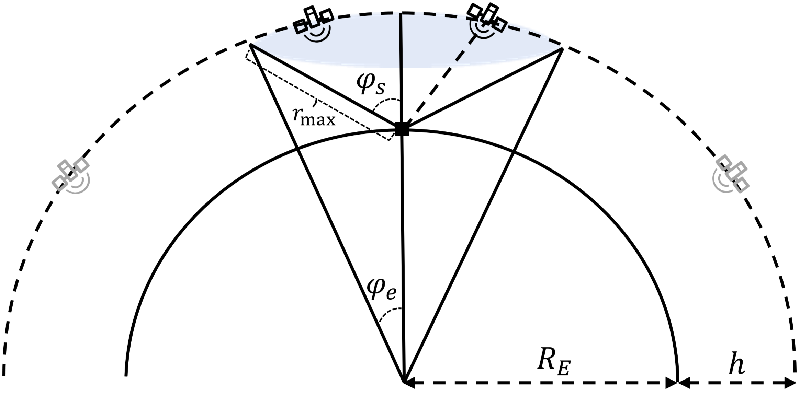
In a groundbreaking study, researchers Fangming Zhao, Nikolaos Pappas, Shi Jin, and Howard H. Yang delve into the intricate dynamics of connectivity in Low Earth Orbit (LEO) satellite-assisted Internet of Things (IoT) networks. The paper primarily addresses the Age of Information (AoI), a metric vital for gauging the timely delivery of status updates in these decentralized networks that utilize energy harvesting from ambient sources.
Understanding the Age of Information and Its Importance
The Age of Information is a novel metric that reflects the freshness of data received at a destination node. It quantifies how long it has been since the most recent update was generated. In a world where instantaneous information is crucial, especially in remote environments with intermittent connectivity, AoI provides a reliable measure that traditional metrics like throughput or latency may overlook. The study emphasizes that timely information delivery is essential for effective decision-making in IoT applications, particularly those utilizing satellite communications.
Key Insights from the Research
The research illuminates several challenges and solutions in enhancing information timeliness in LEO satellite networks:
- Intermittent Connectivity: The mobility of satellites leads to fluctuating connectivity states, making it invaluable for ground nodes to employ a “probe-before-transmission” strategy. This involves the node first confirming satellite availability before transmission, thus reducing energy waste when connectivity is absent.
- Energy Harvesting Dynamics: Devices are typically energy-constrained, which complicates the information updating process. The paper demonstrates that efficient energy harvesting can significantly improve AoI by enabling sustained operations in challenging environments.
- The Role of Spherical Stochastic Geometry: By utilizing spherical stochastic geometry alongside semi-Markov analysis, the researchers derived analytical expressions that characterize how connectivity and energy states evolve together over time, providing a unified lens through which to evaluate system performance.
Probing vs. Blind Transmission: Results of the Study
One of the pivotal findings of this research is the comparison between probing and blind transmission approaches. Probing significantly enhances AoI, particularly in environments where satellite availability is sparse. By pausing transmissions during off periods, devices can save energy, extending their operational period and improving information freshness.
Through numerical analysis, it is shown that optimal AoI performance occurs when the device’s energy consumption matches or exceeds its energy harvesting rate. This finding is particularly enlightening for developing sustainable IoT solutions that rely on both terrestrial and satellite networks.
Looking Ahead: Implications for Future Research
The implications of this study stretch far beyond theoretical constructs. As LEO satellite constellation deployments continue to evolve, understanding AoI will be crucial for optimizing performance in real-world applications, such as remote sensing or disaster management. Further research could focus on integrating additional real-world factors, such as fading, interference, and random access contention, offering more comprehensive operational models.
In conclusion, the analysis presented in this research marks a significant advancement in addressing the challenges of information delivery in non-terrestrial networks, paving the way for innovative solutions that harness the power of satellite technology for IoT connectivity.
Authors: Fangming Zhao, Nikolaos Pappas, Shi Jin, and Howard H. Yang




