
Transforming Computational Possibilities: The Continuous Probabilistic Computer Revealed
A groundbreaking study has introduced a new type of computer architecture known as the Continuous Probabilistic Computer (CPC), which utilizes continuous probabilistic bits (CP-bits) to tackle complex optimization problems more efficiently. This research, spearheaded by a team from the National University of Singapore and National Yang Ming Chiao Tung University, showcases how this innovative framework could revolutionize the field of probabilistic computing.
Understanding Continuous Probabilistic Computing
Traditional probabilistic computing systems rely heavily on binary bits (p-bits), which can only represent two states (0 or 1). This limitation becomes problematic when dealing with problems that require continuous variables, such as temperatures, coordinates, or mixture ratios. The CPC overcomes this challenge by employing CP-bits that can represent a spectrum of values between defined limits. This flexibility allows the computer to sample from conditional distributions determined by local energy levels, opening new avenues for computation.
Key Innovations in Hardware Implementation
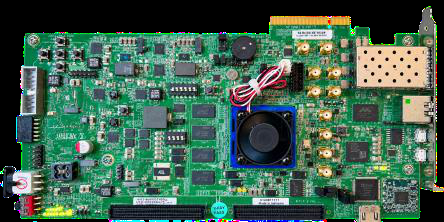
A significant advancement presented in the study is the development of an FPGA (Field-Programmable Gate Array) prototype of the CPC. This prototype demonstrates the practical application of the CPC architecture by successfully performing computations that were previously impossible or inefficient with binary systems. The results were staggering—a reduction in solving time of up to 33,000-fold compared to traditional algorithms for certain optimization tasks.
A Broad Spectrum of Applications
The CPC's capabilities extend far beyond simple computations. The prototype was tested across various tasks, including associative memory recovery, where it achieved a remarkable 100% success rate in retrieving stored MNIST patterns, even from noisy or incomplete inputs. It also excelled in continuous mixture decomposition, effectively identifying the components of a mixture without prior training, showcasing its potential for real-world applications such as materials science and chemical engineering.
Implications for Future Technology
This innovative approach to continuous-state computation could be a game changer for industries reliant on complex optimization. The researchers hint at the possibility of integrating this technology with various physical random sources, potentially leading to even greater computational efficiencies. As industries such as finance, artificial intelligence, and logistics continue to demand more sophisticated solutions, the CPC could pave the way for advancements that significantly enhance computational power and versatility.
Conclusion: A New Era for Probabilistic Computing
The introduction of the Continuous Probabilistic Computer marks a significant leap forward in computing technology. By breaking free from the binary constraints of traditional systems and embracing continuous variables, this new architecture not only boosts efficiency but also expands the scope of problems that can be solved. The ongoing research and development of the CPC holds great promise for practical applications, thus paving the way for an exciting future in the realm of computational science.
Authors: Fang Chao, Hsuan Yao Tu, Yihan He, Gong Xiao, Chin-Fu Nien, Gengchiau Liang


