
Transforming Cluster Admissions: A Game-Changer for Job Scheduling using Timestamped Capacity Records
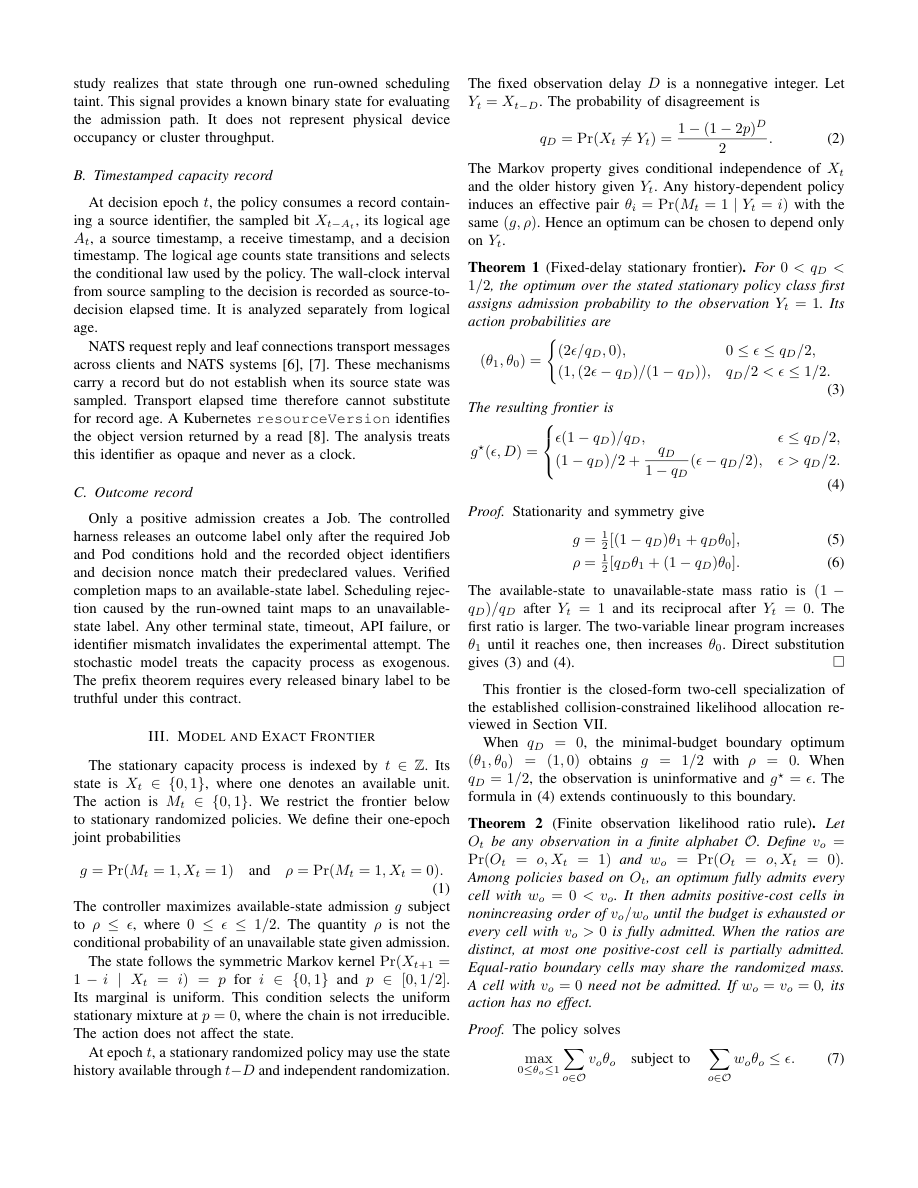
In the fast-evolving world of cloud computing, maintaining the efficiency of shared clusters is crucial for optimal performance. Recent research from Andrew Bond and Syed Izhan Khilji, titled "Budgeted Admission from Timestamped Capacity Records in Shared Clusters," introduces a groundbreaking framework for managing job admissions in clustered environments.
Understanding the Challenge of Admission Control
Shared clusters often face challenges when many users send job requests without controlling their placement. This study addresses the issue of so-called "stale" capacity records — outdated data that may not reflect current system conditions. The researchers focus on creating a system that can make better admission decisions despite these outdated indicators.
Innovative Solutions: A New Admission Algorithm
The proposed admission algorithm connects various components of a cluster system, including sampled capacity data, job requests, and outcomes from Kubernetes, a popular container orchestration platform. By employing a methodology that factors in the timestamp of when capacity data was recorded, the system can make informed decisions about job availability and scheduling.
Specifically, the research develops a set of protocols that utilize a binary state model to manage job admissions under the uncertainty of capacity availability. This allows the system to balance between admitted jobs and unavailable states, optimizing the scheduling process.
Key Contributions and Validation
The research makes several significant contributions:
- A closed-form stationary admission frontier that assesses fixed-delay decision-making in job scheduling.
- Calibration of admission policies using binomial statistics to ensure confidence in the decision-making process.
- An executable procedure that allows real-time policy application and assessment of job admissions in Kubernetes environments.
To validate these contributions, the authors conducted controlled experiments that monitored job admissions, ensuring that all system states, outcomes, and decisions align with recorded histories. This empirical approach confirmed the robustness of their model and its utility in a functional setting.
The Future of Cloud Scheduling
This research is poised to influence the design of future cloud scheduling systems significantly. With the capability to handle timestamped admission records effectively, clusters can enhance their operational efficiency while managing unpredictable user demands. The implications are substantial: faster job processing, better resource allocation, and ultimately a more reliable cloud infrastructure.
By addressing the core issues of admission control through innovative frameworks, Bond and Khilji offer a promising avenue for enhancing cluster operations, making it a vital area for continued exploration in cloud computing and distributed systems.
Authors: Andrew Bond (San Jose State University), Syed Izhan Khilji (TU Wien)


