The Hidden Mechanics of Lumen Formation: Unlocking the Secrets of Biological "Active Balloons"
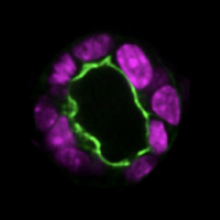
In a remarkable synthesis of biology and physics, researchers have unveiled the complex principles underlying lumenogenesis—the formation of lumens, or fluid-filled cavities, in various organs. The recent review paper, titled "fLumens as active balloons: a biological physics review," authored by S. Echeverría-Alar, B. Narayanan Narasimhan, S. I. Fraley, and W.-J. Rappel, explores how these cavities function and the implications of their formation for health and disease.
Understanding Lumens: The Functional Heart of Organs
At their core, lumens are vital for organ function, enabling processes like nutrient transport and gas exchange. When these cavities fail to form correctly, as seen in conditions like polycystic kidney disease and respiratory malformations, the consequences can be severe. The authors argue that understanding lumen formation through a physics lens offers insights into both basic biological processes and clinical outcomes.
Active Balloons: A New Perspective on Biological Structures
The review likens lumens to "active balloons" that are dynamically shaped and maintained by a multitude of forces. This perspective emphasizes that lumens are not mere passive structures but rather complex systems driven by hydraulic mechanics and cell signaling. The authors draw from principles of out-of-equilibrium physics to characterize the intricate dance between internal pressures and the surrounding tissue's responses.
The Multi-Scale Approach to Lumenogenesis
Delving into the biology behind lumen formation, the authors describe a coordinated effort involving molecular pumps, cell architecture, and extracellular matrices at varying scales—from individual cells to entire organ systems. They highlight the mechanisms through which cells create lumens, including ion transport and mechanical responses, framing these processes within established physical laws.
Mathematical Modeling: Bridging Theory and Experiment
The paper also reviews a variety of theoretical and computational models aimed at predicting lumen dynamics. These models simulate pressure-driven behaviors and coarsening phenomena—where multiple micro-lumens can coalesce into a larger structure. The interplay of factors such as cellular arrangement, force distributions, and biochemical signaling is crucial in understanding how single lumens emerge from networks of cells.
Open Questions and Future Directions
The review identifies several unanswered questions in the field of lumenogenesis that are ripe for exploration. How do changes in cell adhesion and matrix composition affect lumen formation? What role does curvature and tissue geometry play in directing luminal structures? By investigating these aspects, scientists aim to develop more effective therapeutic strategies for congenital and acquired diseases that affect lumen structures.
Practical Applications: Engineering Lumen-like Structures
This research holds significant potential for regenerative medicine and tissue engineering. Insights from lumen formation could enable the development of artificial organoids that replicate biological functions. The integration of designer extracellular matrices presents an exciting avenue for controlling the mechanical properties of the environments in which cells operate, paving the way for advanced tissue engineering approaches.
In conclusion, the study of lumenogenesis as laid out by Echeverría-Alar et al. not only sheds light on the intricate mechanisms that govern organ development but also opens doors to innovative treatments for diseases stemming from lumen malformation. As this interdisciplinary field continues to evolve, the convergence of biology, physics, and engineering promises to unlock further mysteries of life's complex structures.
Authors: {S. Echeverría-Alar, B. Narayanan Narasimhan, S. I. Fraley, W.-J. Rappel}

