
Superlubricating Nanolipogels: The Future of Joint Therapy in Osteoarthritis
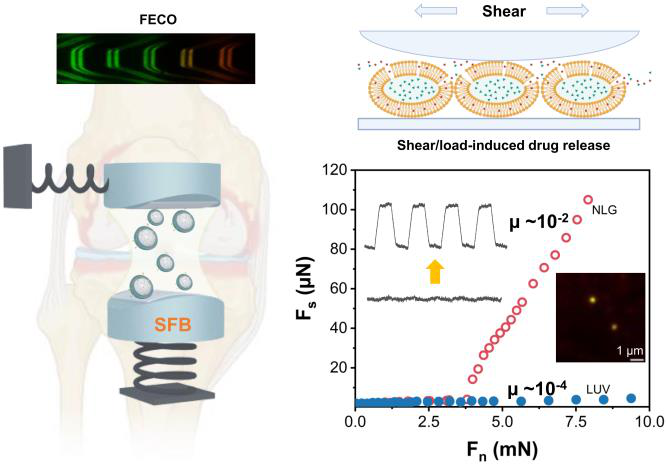
In a groundbreaking study, researchers from the Weizmann Institute of Science have unveiled an innovative solution for joint treatments, potentially revolutionizing how osteoarthritis (OA) is managed. The study introduces cytoskeleton-inspired, adaptive nanolipogels that not only excel in delivering drugs but also significantly reduce friction in the joints, offering a dual-functionality that could enhance patient outcomes.
Understanding Osteoarthritis and its Challenges
Osteoarthritis is a common yet debilitating joint disease that affects millions globally, leading to pain and reduced mobility. Current treatments often involve drug delivery directly into the joint space, yet many existing methods face significant challenges, particularly concerning the stability and effectiveness of the drug delivery systems under mechanical stress. In other words, the delicate liposomes used today can rupture, leading to ineffective treatments and lost therapeutic potential.
The Breakthrough: Nanolipogels
Addressing these challenges, the research team developed a new class of nanocarriers known as nanolipogels (NLGs). These are core-shell structures where a lipid bilayer encapsulates a resilient nanogel core, creating a system inspired by the dynamic and adaptive cytoskeleton found in cells. This biomimetic approach is not only novel but effective. The NLGs showcase remarkable stability, even under pressure, maintaining their integrity while providing low friction at the contact surfaces of the joints.
How Do Nanolipogels Work?
Nanolipogels function through a combination of superlubrication and controlled drug release. The researchers demonstrated that these nanolipogels can maintain an exceptionally low coefficient of friction of approximately ~10-4 at contact pressures as high as 2 MPa, tensions comparable to human knee joints during movement. What’s more, the NLGs exhibit a unique capability to recover their lubricating properties after being subjected to cyclic loading, much like the natural self-repair mechanisms of biological tissues.
A Dual Functionality: Drug Delivery and Lubrication
The excitement around NLGs doesn’t stop with friction reduction. They also serve as effective drug delivery vehicles. The team employed molecular dynamics simulations to illustrate how the hydrogen-bonding networks within the nanogel contribute to a flexible yet stable structure, enabling not just effective lubrication but also targeted and sustained drug release during joint movement.
Real-World Implications
What does this mean for patients suffering from OA? The potential applications of these nanolipogels are vast. With their ability to withstand harsh mechanical conditions while providing effective lubrication and targeted drug delivery, these nanolipogels could lead to significantly improved therapies for OA, reducing pain and enhancing joint function for millions facing this chronic condition.
Conclusion
This innovative research paves the way for a new generation of therapeutic approaches that prioritize both lubrication and drug delivery. As the biomedical field continues to advance, the integration of smart materials akin to biological systems like the cytoskeleton opens doors to treatment options that are not only effective but also mimic the natural healing properties of our bodies.
With further studies and clinical trials, NLGs may soon become a standard in managing osteoarthritis, transforming the quality of life for countless individuals.
Authors: Panpan Zhao, Avijit Mondal, Nir Kampf, Aleksei Solomonov, Roman Kamyshinsky, Jacob Klein




