Revolutionizing Work Dynamics: Balancing Human and AI Collaborations with Task Allocation Frameworks
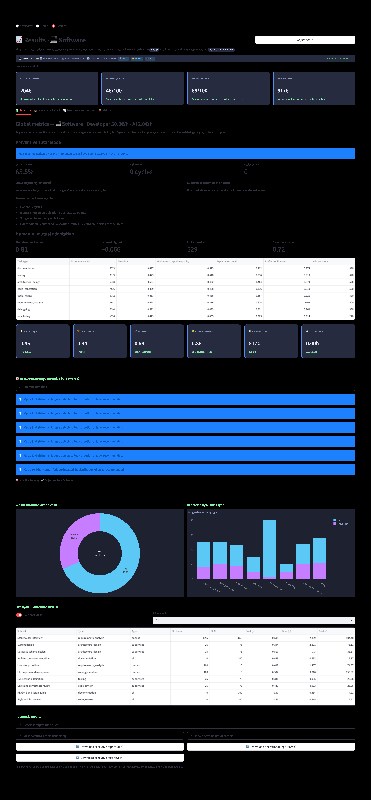
In an era where artificial intelligence is redefining workplace efficiency, determining the optimal distribution of tasks between human workers and AI systems is more crucial than ever. A recent study by Vicente Pelechano and colleagues presents an innovative framework known as Human–Artificial-Intelligence Adaptive Symbiosis (HAAS), which aims to rethink how organizations can effectively blend human expertise with AI capabilities.
Understanding the Challenge of Task Allocation
The fundamental challenge of assigning work between humans and AI often gets oversimplified, treating it as a binary decision: either a human or an AI performs a task. However, real-life operations are far more complex. According to the authors, humans and AI frequently share responsibilities, taking on complementary roles depending on various factors such as context, fatigue, and the nature of the task.
Existing methods for task allocation generally overlook these nuances, making it difficult to achieve a balance between efficiency, oversight, and human capability. The HAAS framework aims to address this problem by providing a structured approach to adaptive task allocation, particularly in areas such as software engineering and manufacturing.
The HAAS Framework: Key Components
HAAS integrates two critical AI components: a rule-based expert system to enforce governance constraints and a contextual-bandit learning system that selects the most suitable collaboration mode based on feedback from outcomes. This allows organizations to maintain efficiency while addressing the well-being of human workers.
One significant feature of HAAS is its representation of task-agent fit through five cognitive dimensions, which include aspects like repetitiveness, technical depth, creativity, ambiguity, and human interaction requirements. This enables organizations to identify the most appropriate mode of collaboration—from full human control to total AI delegation—thereby adapting to diverse operational contexts.
Empirical Findings: Governance as a Tunable Design Variable
The study revealed several critical insights into human-AI task allocation:
- Governance is not a binary switch: Organizations can adjust governance levels to move from fully autonomous AI systems to supervised collaborations, achieving various operational benefits.
- Impact of Governance on Performance: Particularly in manufacturing contexts, increased governance has been shown to enhance operational performance while simultaneously reducing worker fatigue, suggesting a workload-buffering effect.
- No one-size-fits-all solution: Different governance levels yield varying performance results across contexts, indicating the need for organizations to fine-tune their task allocation strategies.
Future Implications of HAAS
The authors emphasize that HAAS is designed not just as a tool for automation, but as a framework for sustainable work design. By enabling organizations to experiment with different allocation policies and governance models before deployment, HAAS provides a structured way to identify the most efficient and responsible integration of human and AI systems.
In a workplace that increasingly depends on AI, the findings from this research underscore the importance of understanding how to effectively humanize technology rather than simply automate tasks. Therefore, exploring frameworks like HAAS could help pave the way for collaborative systems that enhance productivity while optimizing human well-being.
As AI continues to transform industries, findings from this study pave the way for research into multi-agent systems that could redefine the human role within organizations. The promise of HAAS offers a compelling glimpse into the future of human-AI collaboration.
Authors: Vicente Pelechano, Antoni Mestre, Manoli Albert, Miriam Gil

