
Revolutionizing Scheduling Paradigms: Unlocking the Power of Diverse Schedules for Efficient Job Assignment
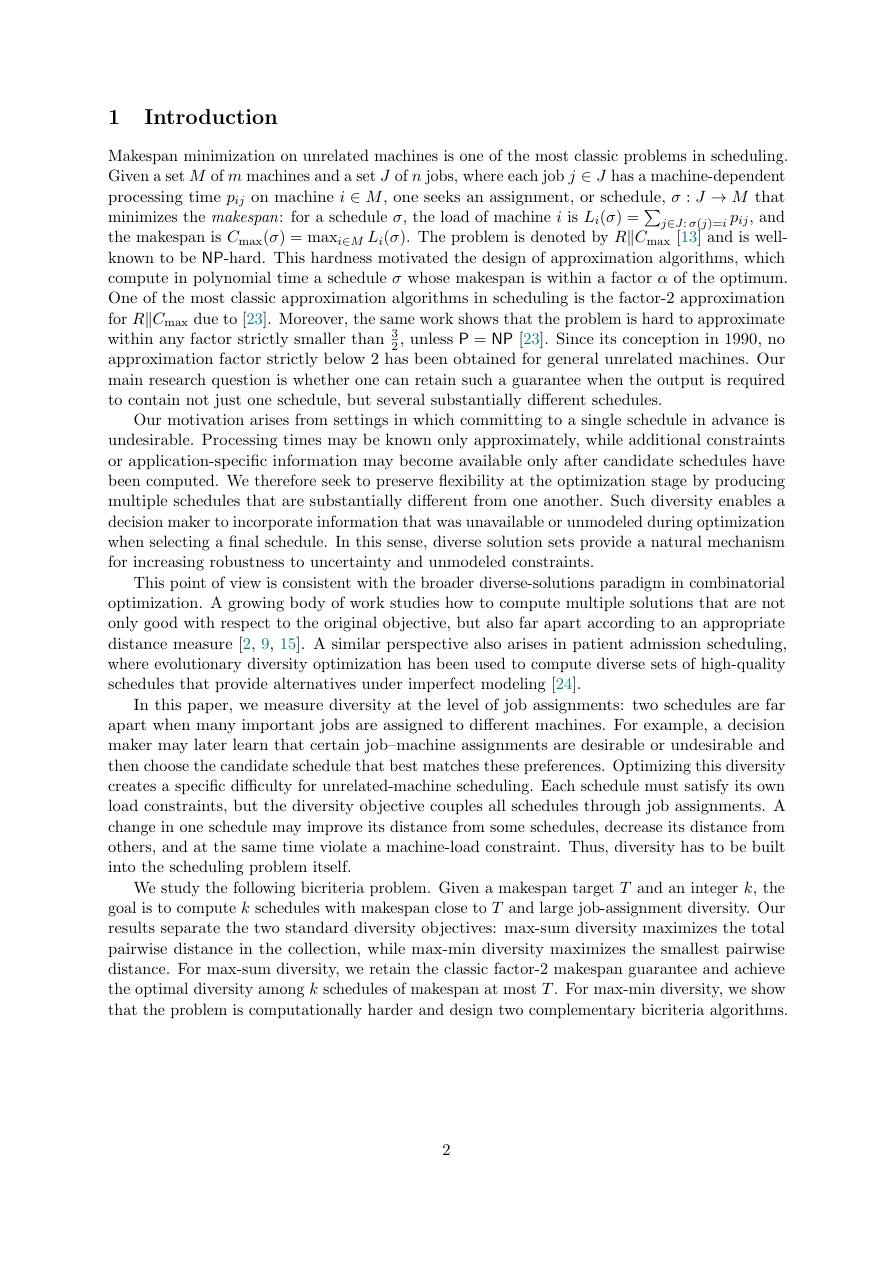
In a groundbreaking research paper titled "fDiverse Schedules for Makespan Minimization on Unrelated Machines", a team of researchers has introduced innovative strategies that redefine how we think about scheduling jobs across multiple machines. The findings focus on creating not just one optimal schedule but an array of substantially different schedules, aiming to improve flexibility in decision-making processes.
The Need for Diverse Scheduling
Traditionally, scheduling jobs on unrelated machines has concentrated on minimizing the makespan—the total time required to complete a set of jobs. However, this paper highlights a gap in how these schedules are created, pointing out that having only one proposed schedule can be limiting. If unforeseen factors arise, such as changes in job processing times or additional constraints, a pre-determined schedule may become inefficient. Thus, the authors advocate for the creation of multiple diverse schedules that are not just optimized for a minimum makespan but are also qualitatively distinct from each other.
Innovative Approaches
The research introduces two primary objectives for achieving diverse scheduling: max-sum diversity, which focuses on maximizing the total pairwise diversity among schedules, and max-min diversity, which aims to maximize the minimum diversity between any pair of schedules. These novel approaches allow for the creation of schedules that are not only within acceptable makespan limits but also offer alternative routes for job assignment that can be leveraged when conditions change.
For example, the authors demonstrate that it is possible to generate multiple schedules, each with a makespan guarantee of at most 2T, which maintains optimal diversity among them. This achievement marks a significant advancement in scheduling techniques, allowing for more robust planning against uncertainties in processing times and job constraints.
Key Findings and Implications
One of the critical insights from this research is the acknowledgment that not all schedules are created equal—having distinct schedules allows decision-makers to integrate new information as it becomes available rather than being locked into a single approach. As businesses increasingly operate in volatile environments, the ability to quickly adapt their scheduling practices could yield competitive advantages.
The implications of this research extend beyond theoretical applications and into practical, real-world scenarios. Industries that rely on complex scheduling, like manufacturing and logistics, could particularly benefit from applying these findings, allowing for improvements in efficiency and resource allocation.
Conclusion
The study of diverse schedules has the potential to transform how organizations approach job scheduling, making it a crucial area for further exploration in operational research. The ability to create and utilize multiple schedules that cater to uncertain environments may define the next evolution in scheduling algorithms, paving the way for smarter, more adaptable operations in various fields.
This research serves as a foundation for future innovations and applications, highlighting the importance of diversity in scheduling for optimizing operations in a world where uncertainty is the only constant.
Authors: Sebastian Bruchhold, Matthias Mnich, Karolina Tammemaa, Morten Weber, Michalis Xefteris, Bart Zondervan


