
Revolutionizing Robotics: The Groundbreaking OpenTac Ecosystem for Tactile Sensing
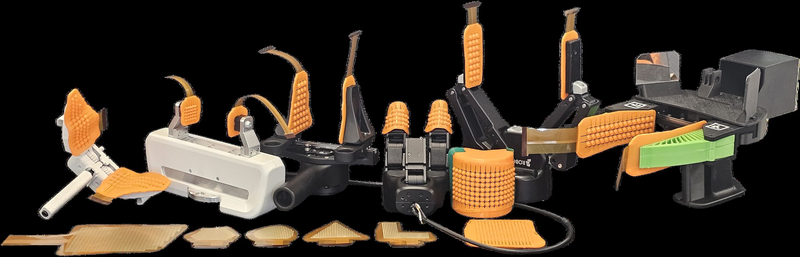
The realm of robotics is on the brink of transformation thanks to a revolutionary new system called OpenTac. Developed by a collaborative team led by researchers from Johns Hopkins University and the Massachusetts Institute of Technology, OpenTac introduces a novel approach to tactile sensing that is highly customizable, scalable, and readily deployable for various robotic applications.
Transforming Tactile Sensing
At its core, OpenTac represents a full-stack ecosystem for tactile sensors. Unlike existing solutions, it allows for the development of tactile skins that are designed to fit any robot geometry. These skins can sense both normal and shear forces, which are critical for robots operating in contact-rich environments. This means that robots can now react more intelligently to their surroundings, improving their ability to manipulate objects and navigate complex tasks.
Key Innovations: From Design to Deployment
OpenTac’s distinct advantage lies in its automated design process, facilitated by a tool known as OpenTac-CAD. This innovative software generates fabrication files from user-defined geometries, whether they are 2D outlines or complex 3D surfaces. Users can describe what kind of sensor they need in simple terms, even using natural language, and the system can interpret these requests, making the technology accessible even to those without extensive engineering expertise.
Accelerating Robot Performance
This remarkable technology enables a high-speed data acquisition rate of up to 1286 frames per second, significantly faster than traditional tactile sensors, which typically operate at rates of 30 to 100 Hz. This leap in performance allows robots to detect rapid changes in their environment, providing them with crucial feedback and enhancing their operational agility.
A Versatile Solution for Diverse Applications
OpenTac's tactile sensors have been successfully tested across various real-world platforms, demonstrating their broad applicability. From grippers and robotic hands to feet and other contact-rich areas, the sensors provide unparalleled feedback that can be utilized in diverse robotic tasks, including policy learning, contact-rich control, and even interactive applications.
Open Access for Future Innovations
True to its open-source philosophy, the entire OpenTac ecosystem—comprising the hardware, software, and even instructional resources—is publicly available. This openness encourages replication, modification, and redistribution, paving the way for future innovations in robotics and tactile sensing.
With OpenTac, researchers and practitioners are empowered to enhance robotic touch sensitivity in a scalable manner, potentially revolutionizing how robots interact with the world around them. As the boundaries of robotics continue to expand, systems like OpenTac set the stage for smarter, more adaptive machines.
For more information on OpenTac and access to all related resources, visit their official site at opentac.github.io.
Authors: Ariel Slepyan, Geeta Chandra Raju Bethala, Jiafeng Gu, Anagha Rajendra Dangle, Yinzhe Zhou, Hongyuan Fu, Jade Sim, Tuhin Basu, Xinyi Yin, Md Faizal Karim, Gregory Hager, Homanga Bharadhwaj, Anand Bhattad, Krishna Murthy Jatavallabhula, Nitish V. Thakor


